Understanding Florida’s Concealed Weapon Laws
If you’ve been arrested for carrying a concealed weapon without a permit in Florida, you’re likely facing serious questions about your future. Is carrying concealed weapon without permit a felony? The answer depends on several factors, including the type of weapon, your criminal history, and the specific circumstances of your arrest. At Russo Law & Advocacy, Dominique Russo defends clients across Palm Beach, Broward, and Miami-Dade Counties against carrying concealed weapon charge allegations, protecting their rights and fighting for the best possible outcomes. When facing these serious accusations, retaining an experienced attorney for gun charges is essential to navigating Florida’s complex firearms laws.
Understanding Florida’s concealed carry permit requirements is essential for anyone who owns or carries firearms in the state. Under Florida Statute § 790.01, the penalties for carrying a concealed weapon without proper licensing can range from misdemeanors to felonies, with consequences that extend far beyond the courtroom.
Is Carrying a Concealed Weapon a Felony in Florida?
The Short Answer
Is carrying a concealed weapon a felony? It depends on:
✅ Type of weapon – Firearms vs. other weapons
✅ Prior criminal history – Especially prior convictions
✅ Location of offense – Enhanced penalties near schools or government buildings
✅ Additional charges – Other crimes committed simultaneously
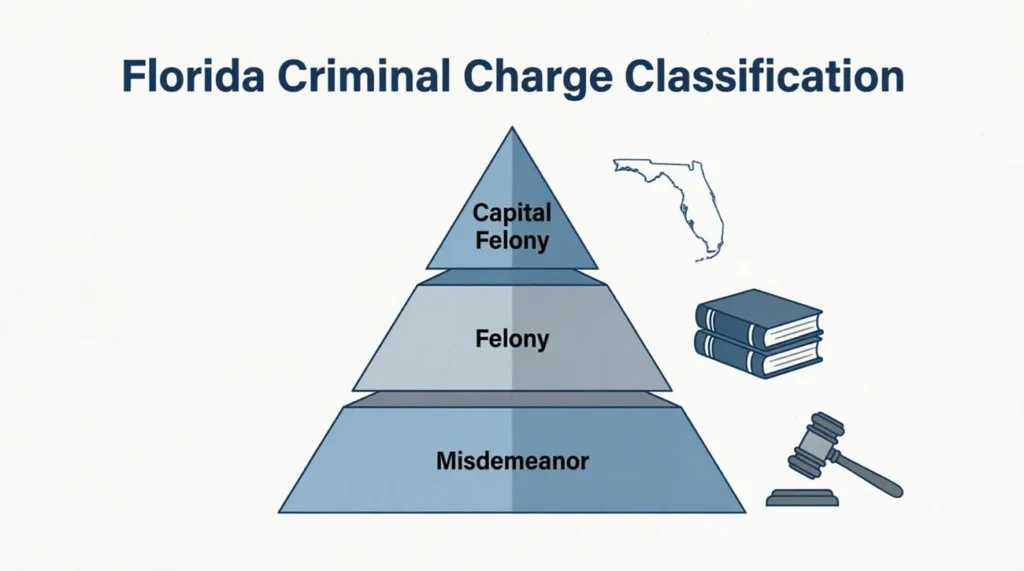
Charge Classifications
| Weapon Type | Charge Level | Maximum Penalty |
|---|---|---|
| Firearm | 3rd-degree felony | Up to 5 years prison, $5,000 fine |
| Other Deadly Weapon | 1st-degree misdemeanor | Up to 1 year jail, $1,000 fine |
| Firearm with Prior Conviction | Enhanced felony | Up to 15 years (habitual offender) |
Key Distinction: Firearm vs. Other Weapons
Florida law treats firearms much more severely than other weapons:
- Firearms (pistols, revolvers, rifles, shotguns) = Felony
- Other deadly weapons (knives, clubs, brass knuckles) = Misdemeanor
- Electric weapons/devices (tasers, stun guns) = Misdemeanor (with exceptions)
Carrying Concealed Weapon Florida: Legal Definitions
What Constitutes “Concealed”?
Under Florida law, a weapon is “concealed” if it is:
✅ Hidden from ordinary observation
✅ Not readily identifiable as a weapon
✅ Carried in a manner that prevents others from seeing it
Note: A firearm in a glove compartment or center console is considered concealed. Even under a seat or in a bag may qualify as concealed depending on circumstances.
What Qualifies as a “Weapon”?
Florida’s carrying concealed weapon florida statute covers:
- Firearms (any weapon that expels a projectile by gunpowder)
- Electric weapons (tasers, stun guns)
- Deadly weapons (dirks, knives, slingshots, metal knuckles, billies)
- Other dangerous instruments capable of causing death or great bodily harm
Exceptions to the Law
Some individuals may legally carry concealed weapons without permits:
- Law enforcement officers (active and retired with proper ID)
- Military personnel in certain circumstances
- Security guards on duty with proper licensing
- Home or business owners on their own property
- Traveling under federal law protections (limited circumstances)
Concealed Carry Permit Requirements in Florida
How to Obtain a Concealed Weapons Permit
For those asking about concealed weapons permit state of florida requirements:
✅ Age requirement – 21 years or older
✅ Residency – Florida resident or military stationed in Florida
✅ Training – Completed certified firearms training course
✅ Background check – No disqualifying criminal history
✅ Application – Submitted to Florida Department of Agriculture
✅ Fingerprints – Electronic submission required
✅ Fee – Approximately $97-$119 depending on processing
Disqualifying Factors for Permit
You CANNOT obtain a permit if you have:
❌ Felony convictions (unless civil rights restored)
❌ Certain misdemeanors (domestic violence, assault, battery)
❌ Pending criminal charges
❌ Restraining orders against you
❌ Drug or alcohol addiction adjudication
❌ Mental health adjudications
For more on felony firearm restrictions, see our guide on can felons own guns in florida.
Penalties for Carrying Concealed Weapon Without Permit
First-Offense Penalties
For first-time offenders, penalties include:
For Firearm (Felony):
- 3rd-degree felony conviction
- Up to 5 years in prison
- Fines up to $5,000
- Probation up to 5 years
- Permanent felony record
- Loss of firearm rights permanently
For Other Weapons (Misdemeanor):
- 1st-degree misdemeanor conviction
- Up to 1 year in jail
- Fines up to $1,000
- Probation up to 1 year
- Misdemeanor record (less severe but still damaging)
Enhanced Penalties
Penalties increase significantly with:
- Prior convictions – Habitual offender enhancements
- School zone violations – Additional penalties under federal law
- Commission of other crimes while carrying concealed
- Possession of stolen firearm – Separate felony charges
- Drug trafficking nexus – Enhanced federal prosecution
Federal Consequences
Federal law may apply when:
- Firearm crossed state lines (interstate commerce)
- School zones are involved
- Prior felony convictions exist (felon in possession)
- Drug trafficking is involved
Given the severe consequences of a conviction, working with an experienced attorney for gun charges can make a critical difference in the outcome of your case.
Defense Strategies for Concealed Weapon Charges
Common Defense Approaches
A skilled gun possession lawyer employs multiple strategies:
✅ Lack of Concealment – Arguing weapon was in plain view
✅ Temporary Possession – Recent acquisition without opportunity to secure
✅ Emergency Circumstances – Immediate threat requiring protection
✅ Legal Authority – Valid permit in another state with reciprocity
✅ Misidentification – Weapon belonged to someone else
Constitutional Challenges
- Illegal search and seizure – Fourth Amendment violations
- Traffic stop legality – No reasonable suspicion for stop
- Miranda violations – Statements obtained without warnings
- Right to counsel – Denial of attorney access
Procedural Defenses
- Chain of custody issues with weapon evidence
- Lack of proper testing (fingerprints, DNA)
- Witness credibility challenges
- Discovery violations by prosecution
The Importance of a Gun Possession Lawyer
Why Specialized Representation Matters
A gun possession lawyer with firearms law expertise provides:
✅ Understanding of complex firearm statutes
✅ Knowledge of permit exceptions and reciprocity
✅ Experience with federal-state jurisdiction issues
✅ Relationships with local prosecutors
✅ Strategic negotiation for charge reductions
What We Do for Our Clients
- Investigate arrest circumstances for procedural errors
- Challenge search and seizure legality
- Verify permit status and exceptions
- Negotiate with prosecutors for reduced charges
- Protect Second Amendment rights long-term
For related violent crime defense, see our page on aggravated assault and battery. A dedicated attorney for gun charges will also evaluate whether any constitutional violations occurred during your arrest that could lead to suppression of evidence or dismissal of charges.
Long-Term Consequences of Conviction
Criminal Record Impact
- Permanent felony record (for firearm convictions)
- Difficulty finding employment – Background checks
- Housing application rejections
- Professional license issues
- Educational opportunities affected
Firearm Rights Loss
- Permanent prohibition on firearm possession
- Federal restrictions under 18 U.S.C. § 922(g)
- No hunting rights with firearms
- Self-defense limitations in home
Other Consequences
- Travel restrictions (international travel complicated)
- Immigration consequences for non-citizens
- Voting rights loss until restored
- Jury service disqualification
FAQs About Carrying Concealed Weapons in Florida
1. Can I carry a concealed weapon in my car without a permit?
Generally no. A firearm in your glove compartment, center console, or under seat is considered concealed and requires a permit.
2. Is open carry legal in Florida?
No. Florida generally prohibits open carry of firearms, with limited exceptions (hunting, fishing, camping, or on private property).
3. What happens if I have a permit but forgot it?
If stopped and you have a valid permit but forgot it, you may still face charges but have stronger defenses. Provide permit information to your attorney for gun charges immediately.
4. Can a first-time offender avoid jail time?
Often yes. First-time misdemeanor charges may result in probation; felony charges may be reduced through negotiation or pretrial intervention.
5. Do you handle concealed weapon cases throughout South Florida?
Yes. We serve all South Florida counties, including:
- Miami-Dade County (Miami, Coral Gables, Hialeah)
- Palm Beach County (West Palm Beach, Boca Raton, Jupiter)
- Broward County (Fort Lauderdale, Hollywood, Pembroke Pines)
Facing Concealed Weapon Charges? Get Defense Help Now
If you’re facing carrying concealed weapon without permit charges, don’t risk a felony conviction without experienced defense. Contact Dominique Russo at Russo Law & Advocacy for a free consultation. We serve clients across South Florida, including:
📍 Palm Beach County (West Palm Beach, Boca Raton, Jupiter)
📍 Broward County (Fort Lauderdale, Hollywood, Pembroke Pines)
📍 Miami-Dade County (Miami, Coral Gables, Hialeah)
📞 Free Consultation
“A concealed weapon charge doesn’t have to mean a felony conviction. We fight to protect your rights and your Second Amendment freedoms.”