Facing criminal charges is a daunting experience, but when mental health concerns arise, the legal process becomes even more complex. In Florida, the concept of ‘incompetency to stand trial’ is a critical legal defense that can significantly alter the course of a criminal case. It addresses whether a defendant possesses the mental capacity to understand the proceedings against them and assist in their own defense. Understanding what does incompetent to stand trial mean in Florida is crucial for anyone navigating these challenging circumstances.
Attorney Dominique Russo and her team at Russo Law & Advocacy are dedicated to guiding clients through the intricacies of Florida’s legal system, particularly when mental health issues intersect with criminal charges. We serve individuals across South Florida, including Palm Beach County, Miami-Dade County, and Broward County, ensuring that their rights are protected and their voices heard.
Let’s delve into the specifics of this legal concept and its implications in the Sunshine State.
Understanding Incompetency to Stand Trial in Florida’s Legal System
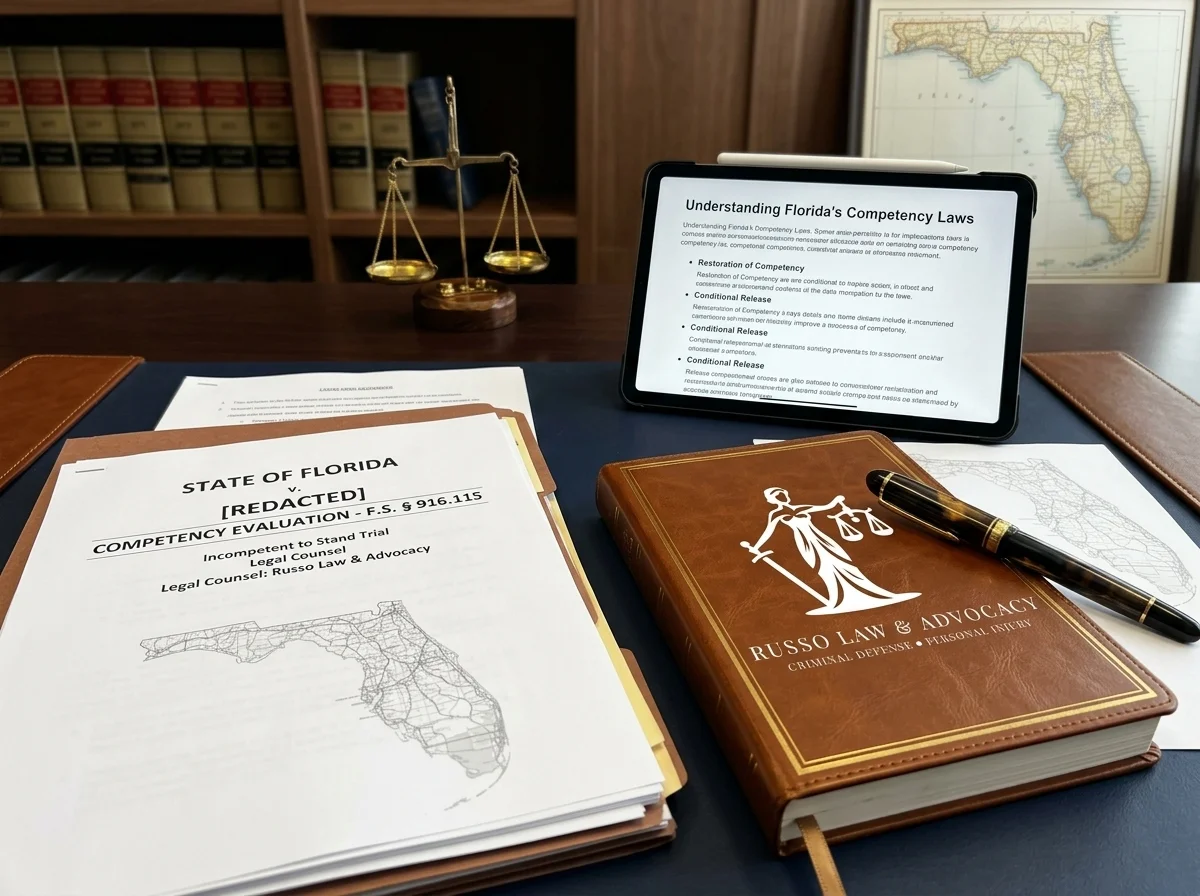
In Florida, a defendant is considered incompetent to stand trial if they lack the mental capacity to understand the charges and proceedings against them, or to assist their attorney in their defense. This is not about guilt or innocence, but rather about the defendant’s present mental state and their ability to participate meaningfully in their own legal process. The legal system prioritizes fairness and due process, meaning that no one should be tried if they cannot comprehend what is happening.
The Legal Standard for Competency

The standard for competency in Florida is outlined in Florida Rule of Criminal Procedure 3.210. It dictates that a defendant must have a rational as well as factual understanding of the proceedings against them and be able to consult with their lawyer with a reasonable degree of rational understanding. This includes understanding the nature of the charges, the potential penalties, the roles of the judge, jury, and attorneys, and the ability to communicate relevant information to their defense counsel.
For instance, in a case in Miami-Dade County, if a defendant suffering from severe delusions believes their attorney is part of a conspiracy against them, they would likely be deemed incompetent because they cannot rationally assist in their defense. Similarly, a defendant in Broward County who cannot recall basic facts about their alleged offense due to a severe cognitive impairment might also be found incompetent.
The Evaluation Process and Restoration of Competency
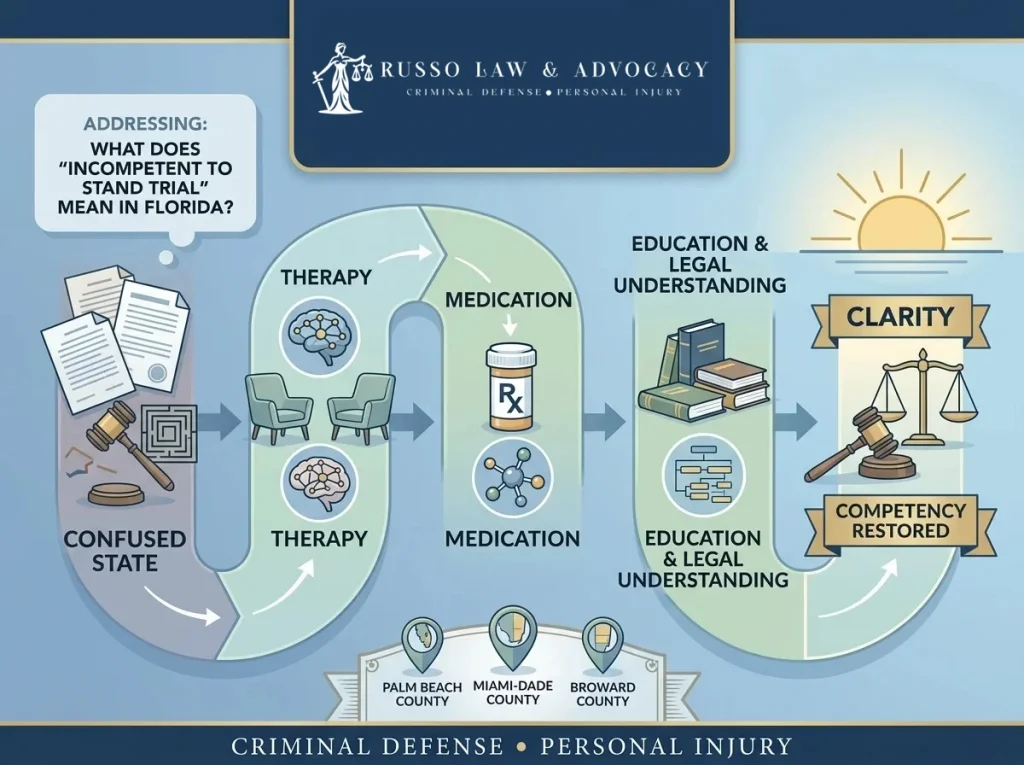
When there is reason to believe a defendant may be incompetent, either the defense or prosecution can file a motion for a competency evaluation. The court will then appoint one or more mental health experts, typically a psychiatrist or psychologist, to examine the defendant. These experts assess the defendant’s mental state, cognitive abilities, and understanding of the legal process.
If the experts determine the defendant is incompetent, the court will issue an order of incompetency. The goal then shifts from prosecution to ‘restoration of competency.’ This often involves placing the defendant in a mental health facility for treatment, such as medication management, therapy, or educational programs designed to help them understand legal concepts. The duration of this restoration period varies significantly depending on the individual’s condition and responsiveness to treatment.
| Aspect | Incompetency to Stand Trial | Insanity Defense |
|---|---|---|
| Timing | Present mental state, at time of trial | Mental state at time of alleged crime |
| Purpose | Determines fitness to proceed with trial | Determines criminal responsibility for the act |
| Outcome if successful | Trial postponed, defendant sent for treatment | Acquittal, potentially civil commitment |
| Legal Basis | Due process, fair trial rights | Lack of mens rea (guilty mind) |
Mental Health Courts and Local Initiatives Across Florida
Florida has recognized the need for specialized approaches to cases involving mental illness. Mental Health Courts offer an alternative to traditional criminal proceedings for eligible defendants, focusing on treatment and rehabilitation rather than incarceration. These courts aim to divert individuals with mental health disorders from the criminal justice system into appropriate community-based treatment programs.
For more information on these specialized courts, you can Read more.
Palm Beach County Mental Health Court Requirements
Palm Beach County’s Mental Health Court, like others in Florida, has specific eligibility criteria. Generally, defendants must have a diagnosed mental illness, their offense must be non-violent, and they must be willing to participate in a structured treatment plan. The program typically involves regular court appearances, mental health treatment, substance abuse treatment (if applicable), and supervision. The duration of how long does mental health court last in Florida can vary, often ranging from 12 to 24 months, depending on the individual’s progress and the severity of their condition. Successful completion can lead to dismissal of charges or reduced sentences.
While distinct, the principles of rehabilitation and support found in mental health courts share common ground with other specialized programs, such as those for substance abuse. You can learn more about local initiatives by reading about the Read more.
Miami-Dade and Broward County Approaches
Miami-Dade County and Broward County also operate robust Mental Health Courts, each with their own specific requirements and program structures tailored to their local populations. In Miami-Dade, the program emphasizes intensive case management and access to a wide network of community mental health providers. Broward County’s approach often involves a collaborative team of judges, prosecutors, defense attorneys, and mental health professionals working together to create individualized treatment plans and monitor progress.
These regional variations highlight the localized efforts to address mental health within the criminal justice system, providing vital support for individuals who might otherwise fall through the cracks.
| Feature | Palm Beach County MHC | Miami-Dade County MHC | Broward County MHC |
|---|---|---|---|
| Eligibility Focus | Non-violent offenses, diagnosed mental illness, willingness to participate | Similar to PBC, strong emphasis on treatment engagement | Non-violent offenses, mental health diagnosis, commitment to recovery |
| Program Duration | Typically 12-24 months | Variable, often 12-18 months | Generally 12-24 months |
| Key Emphasis | Structured treatment, regular court reviews | Intensive case management, community resource integration | Collaborative team approach, individualized plans |
Permanently Incompetent to Stand Trial in Florida
What happens if a defendant is found permanently incompetent to stand trial Florida? This is a challenging situation. If, after a period of treatment and restoration efforts, experts determine that a defendant’s competency cannot be restored within the foreseeable future, the court must make a difficult decision. In such cases, the criminal charges may be dismissed without prejudice, meaning they could theoretically be refiled if competency is ever restored. However, the defendant may then be subject to civil commitment proceedings, where they could be involuntarily committed to a mental health facility for ongoing treatment and care, not as a punishment, but for their own safety and the safety of the community.
Insanity Defense vs. Incompetency to Stand Trial: A Critical Distinction
It is vital to distinguish between being incompetent to stand trial and pleading the insanity defense. While both involve mental health, they address different aspects of a criminal case. Incompetency focuses on the defendant’s mental state at the time of the trial, determining if they are fit to participate in the legal process. The insanity defense, conversely, pertains to the defendant’s mental state at the time the alleged crime was committed. It argues that due to a severe mental disease or defect, the defendant did not know what they were doing or that what they were doing was wrong.
A defendant can be competent to stand trial but still pursue an insanity defense, or vice versa. Understanding this difference is paramount for a robust legal strategy. For a deeper dive into this topic, you can Read more.
Navigating the Legal System with Dominique Russo
The legal landscape surrounding mental health and criminal charges in Florida is intricate and constantly evolving. Whether you are dealing with questions about what does incompetent to stand trial mean in Florida, navigating mental health court requirements in Palm Beach County, or understanding the nuances of competency restoration, having experienced legal counsel is indispensable. Dominique Russo brings over a decade of experience to these complex cases, offering compassionate yet assertive representation.
Her firm, Russo Law & Advocacy, is committed to advocating for individuals facing these unique challenges, ensuring that their rights are upheld and that they receive the most favorable outcome possible. We understand the profound impact these legal issues have on individuals and their families, and we are here to provide clarity and strategic defense.
Legal Disclaimer: This article provides general information and is not intended as legal advice. The law is complex and varies by jurisdiction and specific facts. For advice on your particular situation, you should consult with a qualified attorney.
Florida Statutes Related to Incompetency
The legal framework for determining competency to stand trial in Florida is primarily governed by Florida Statute 916.145, which outlines the procedures for competency examinations and restoration. This statute ensures that defendants’ due process rights are protected throughout the legal process. You can review the full text of the statute at flsenate.gov.
Frequently Asked Questions (FAQ) about Incompetency to Stand Trial in Florida
What does incompetent to stand trial mean in Florida?
Incompetent to stand trial in Florida means a defendant lacks the mental capacity to understand the charges and legal proceedings against them, or to assist their attorney in their own defense. It’s a determination of their present mental fitness to participate in a trial, not a judgment of guilt or innocence.
How is competency determined in Florida?
Competency is determined through a court-ordered evaluation by mental health experts, typically psychiatrists or psychologists. They assess the defendant’s mental state and provide a report to the court, which then makes a ruling based on the evidence.
How long does mental health court last in Florida?
The duration of mental health court programs in Florida varies, typically ranging from 12 to 24 months. The exact length depends on the individual’s progress in treatment, the severity of their mental health condition, and compliance with program requirements.
What happens if someone is permanently incompetent to stand trial in Florida?
If a defendant is deemed permanently incompetent to stand trial in Florida, criminal charges may be dismissed without prejudice. However, they may then face civil commitment proceedings, leading to involuntary commitment to a mental health facility for ongoing care and treatment.
What is the difference between insanity defense vs incompetent to stand trial?
Incompetency to stand trial refers to a defendant’s mental state at the time of trial, assessing their ability to participate. The insanity defense, conversely, relates to the defendant’s mental state at the time of the alleged crime, arguing they lacked criminal responsibility due to a severe mental disease or defect.
Get a Defense Attorney Now
Contact Dominique Russo at Russo Law & Advocacy for a complimentary consultation. We serve clients across South Florida, including:
- Palm Beach County (West Palm Beach, Boca Raton, Jupiter)
- Broward County (Fort Lauderdale, Hollywood, Pembroke Pines)
- Miami-Dade County (Miami, Coral Gables, Hialeah)