Criminal sentencing in florida
The journey through the criminal justice system doesn’t end with a guilty verdict or a plea agreement. For many, the most critical phase is yet to come: criminal sentencing in Florida. This complex process determines the penalties an individual will face, ranging from probation and fines to lengthy prison terms. Understanding the intricacies of Florida’s sentencing guidelines, the role of aggravating and mitigating factors, and how these elements are applied across different jurisdictions like Palm Beach County, Miami-Dade County, and Broward County is paramount for anyone involved in the system.
At Russo Law & Advocacy, led by experienced legal professional Dominique Russo, we recognize the profound impact sentencing decisions have on individuals and their families. Our aim is to demystify this critical stage, providing clarity and insight into what to expect when facing criminal sentencing in the Sunshine State.
Understanding Criminal Sentencing in Florida

Criminal sentencing in Florida is governed primarily by the Florida Criminal Punishment Code, detailed in Florida Statutes Chapter 921. This code provides a structured framework designed to ensure consistency and fairness in sentencing across the state. The cornerstone of this system is the sentencing scoresheet, which calculates a presumptive sentence based on the severity of the primary offense, prior convictions, and other factors.
The Florida Sentencing Guidelines (specifically F.S. 921.0022 and F.S. 921.0024) dictate how points are assigned for various offenses and prior convictions. These points accumulate to determine a minimum permissible sentence, which judges are generally required to impose. However, there are exceptions and opportunities for deviation, making skilled legal representation indispensable.
Key Factors Influencing Criminal Sentencing in Florida
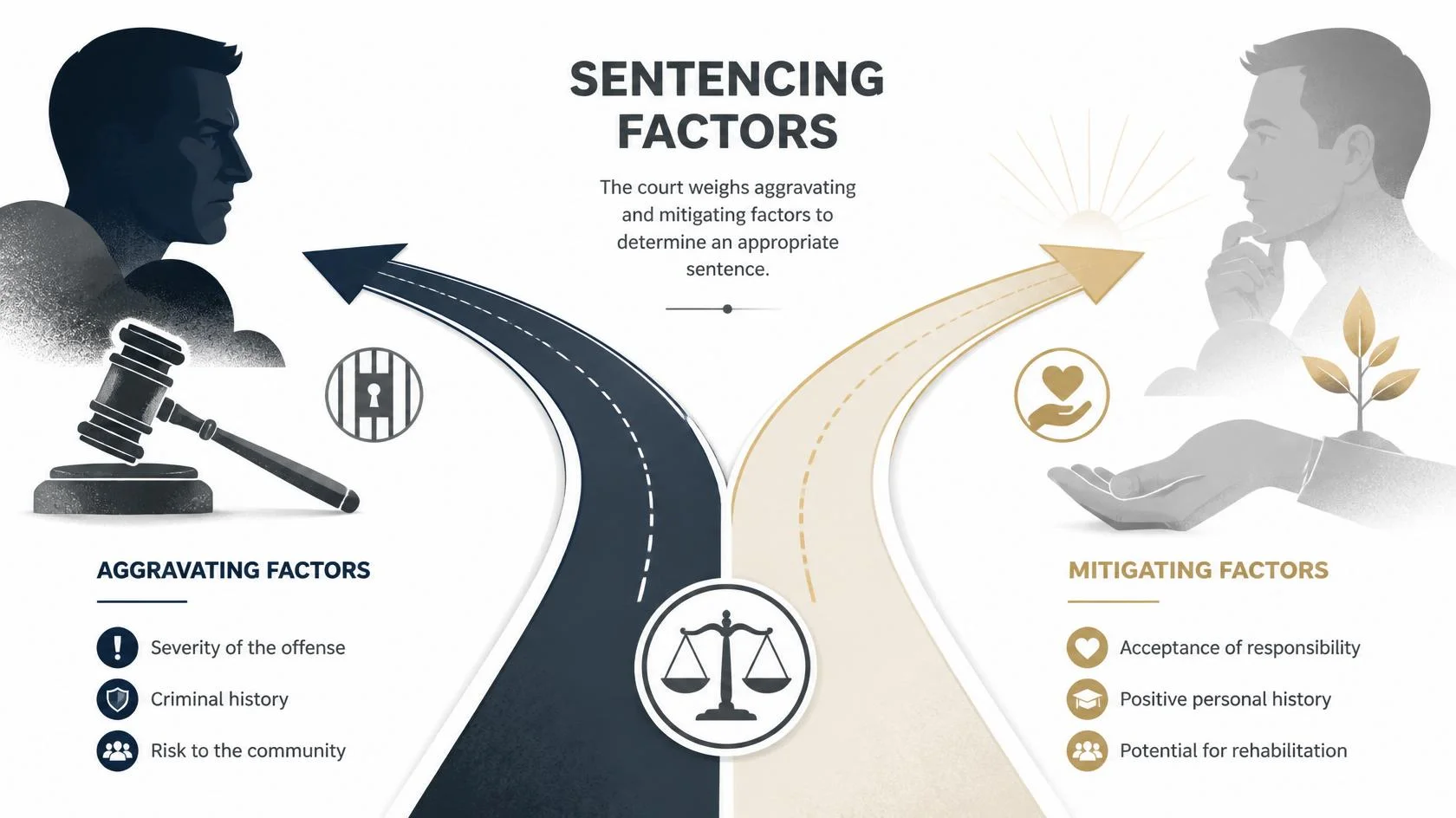
While the scoresheet provides a baseline, a judge’s final decision on criminal sentencing can be significantly influenced by various factors presented during the sentencing hearing. These are broadly categorized as aggravating and mitigating factors.
What is an Aggravating Factor?
An aggravating factor is any fact or circumstance that increases the severity or culpability of a criminal act. These factors can lead to a harsher sentence, potentially exceeding the presumptive sentence calculated by the guidelines. Examples include the use of a weapon, the victim’s vulnerability, the heinousness of the crime, or a history of violence. For instance, in a case of armed robbery in Miami-Dade County, the presence of a firearm would be a significant aggravating factor, potentially leading to a much longer prison term. See More →
Aggravating and Mitigating Factors
Conversely, mitigating factors are circumstances that may reduce the culpability of the defendant or the severity of the crime, potentially leading to a more lenient sentence. These might include a lack of prior criminal history, remorse, cooperation with law enforcement, mental health issues, or the defendant’s role as a primary caregiver. Presenting compelling mitigating factors is a crucial aspect of defense strategy during criminal sentencing.
| Factor Type | Impact on Sentencing | Common Examples |
|---|---|---|
| Aggravating Factors | Increases severity; can lead to harsher penalties beyond presumptive sentencing guidelines. | Use of a deadly weapon, victim vulnerability, prior violent offenses, extreme cruelty. |
| Mitigating Factors | Decreases culpability; can lead to more lenient sentences or downward departures. | Lack of prior record, remorse, cooperation, mental health issues, minor role in offense. |
Navigating Sentencing Guidelines Across South Florida Counties
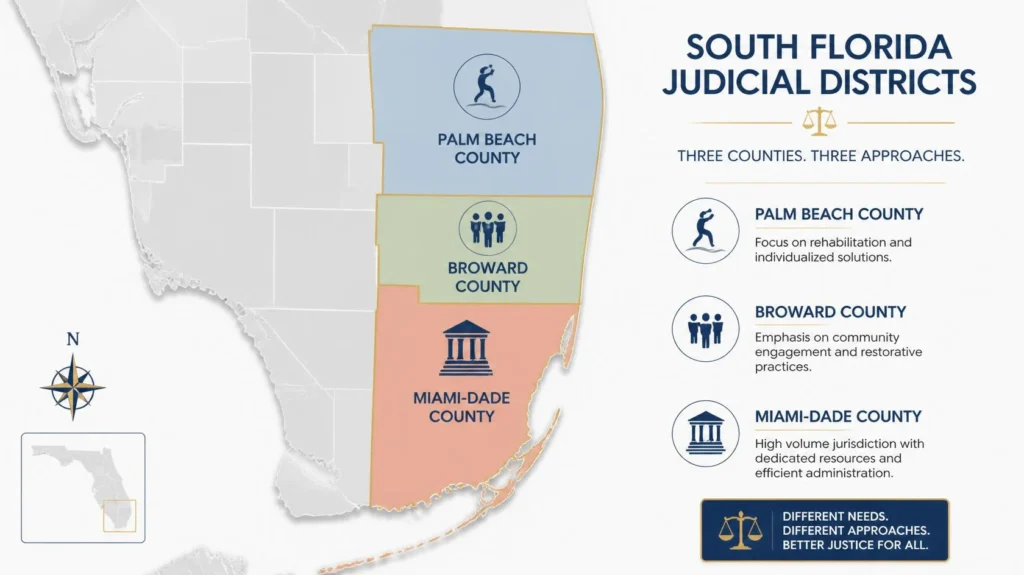
While Florida’s sentencing guidelines provide a statewide framework, the application and local nuances of criminal sentencing can vary significantly across different judicial circuits. Palm Beach County, Miami-Dade County, and Broward County, each with their unique demographics and court cultures, present distinct environments for sentencing.
Palm Beach County’s Approach to Sentencing
In Palm Beach County, particularly in judicial centers like West Palm Beach and Boca Raton, the courts often emphasize structured rehabilitation programs for certain non-violent offenses, alongside traditional penalties. While adhering to state guidelines for sentencing, judges here may consider the availability of local treatment facilities and community service opportunities as part of a comprehensive sentencing plan. For example, a first-time offender facing drug charges might be directed towards a robust drug court program, aiming for recovery rather than solely incarceration, provided strong mitigating factors are presented by counsel like Dominique Russo.
Criminal Sentencing in Miami-Dade County
Miami-Dade County, home to bustling Miami and Hialeah, is the most populous county in Florida and consequently handles a vast volume of criminal cases. This high caseload can sometimes lead to a greater emphasis on plea bargains to manage the judicial system efficiently. While the criminal sentencing guidelines are strictly followed, the sheer volume means that prosecutors and judges are often seeking resolutions that balance justice with practical court management. Defendants in Miami-Dade may find that well-negotiated plea agreements, even for serious offenses, are more common, making the expertise of a Defense Attorney crucial. See More →
Broward County: Specifics of Criminal Sentencing
Broward County, encompassing Fort Lauderdale and Pembroke Pines, often presents a blend of approaches seen in its neighboring counties. There’s a strong focus on community corrections and diversion programs, particularly for juvenile offenders and those with mental health challenges. However, for serious violent crimes, Broward County courts are known for imposing stringent sentences, reflecting a commitment to public safety. Understanding the local judicial temperament and available resources is key when navigating criminal sentencing in this diverse county.
| Aspect of Sentencing | Palm Beach County | Miami-Dade County | Broward County |
|---|---|---|---|
| Court Caseload Volume | High | Very High (Highest in Florida) | High |
| Emphasis on Diversion/Rehab | Strong for non-violent offenses | Available, but high volume can limit individual attention | Strong, especially for juveniles and mental health cases |
| Plea Bargain Prevalence | Common | Very Common (due to caseload) | Common |
| Judicial Temperament (General) | Balanced, often open to structured alternatives | Practical, focused on efficient resolution | Firm on violent crime, supportive of rehabilitation for others |
The Role of Legal Representation in Criminal Sentencing

The complexities of criminal sentencing in Florida, coupled with the significant impact on one’s life, underscore the absolute necessity of skilled legal representation. An experienced Attorney, like Dominique Russo, can:
- Accurately calculate your sentencing scoresheet to anticipate potential penalties.
- Identify and present compelling mitigating factors to argue for a downward departure from the guidelines.
- Challenge aggravating factors presented by the prosecution.
- Negotiate effectively with prosecutors for favorable plea agreements that can significantly impact sentencing.
- Represent your interests vigorously during sentencing hearings, ensuring your voice is heard and your rights are protected.
Navigating the nuances of sentencing guidelines and advocating for the best possible outcome requires a deep understanding of the law and local court practices. Whether you are in Palm Beach County, Miami-Dade County, or Broward County, the right legal counsel can make a profound difference in the outcome of your criminal sentencing.
Legal Disclaimer: The information provided in this article is for general informational purposes only and does not constitute legal advice. The laws regarding criminal sentencing in Florida are complex and subject to change. Each case is unique, and the outcome depends on specific facts and circumstances. You should not act or rely on any information contained herein without seeking the advice of a qualified attorney.
In conclusion, criminal sentencing in Florida is a multifaceted process that extends far beyond the initial verdict. From understanding the statewide criminal sentencing guidelines to appreciating the local variations in Palm Beach, Miami-Dade, and Broward Counties, every detail matters. For anyone facing this critical stage, securing knowledgeable legal advocacy is not just recommended, it’s essential. Dominique Russo and the team at Russo Law & Advocacy are dedicated to guiding clients through these challenging times.
Frequently Asked Questions (FAQ) about Criminal Sentencing in Florida
What are the Florida Criminal Punishment Code Sentencing Guidelines?
The Florida Criminal Punishment Code Sentencing Guidelines are a set of rules and calculations used to determine a presumptive sentence for criminal offenses in Florida. They assign points based on the primary offense, prior convictions, victim injury, and other factors, resulting in a minimum permissible sentence that judges are generally required to impose.
How do aggravating factors influence criminal sentencing?
Aggravating factors are circumstances that increase the severity or culpability of a crime, such as the use of a weapon, extreme cruelty, or a victim’s vulnerability. When present, these factors can lead a judge to impose a harsher sentence, potentially exceeding the minimum sentence suggested by the criminal sentencing guidelines.
Can a judge deviate from the presumptive sentence in Florida?
Yes, a judge can deviate from the presumptive sentence, either upward or downward, if specific legal grounds are established. This is known as a departure. Downward departures often occur due to compelling mitigating factors, while upward departures are typically based on significant aggravating factors not already accounted for in the scoresheet. This requires strong legal arguments.
Are there differences in criminal sentencing practices between Palm Beach, Miami-Dade, and Broward Counties?
While all counties adhere to statewide criminal sentencing guidelines, local judicial circuits can exhibit nuances in their application. Factors like court caseload volume, emphasis on diversion programs, and judicial temperament can lead to variations in how sentences are approached, making local legal expertise vital in Palm Beach County, Miami-Dade County, and Broward County.
Why is legal representation crucial during criminal sentencing in Florida?
Legal representation is crucial because an attorney can accurately calculate scoresheets, identify and present mitigating factors, challenge aggravating factors, negotiate plea agreements, and advocate for the best possible outcome during the sentencing hearing. Their expertise ensures your rights are protected and all legal avenues are explored to achieve a fair resolution in your criminal sentencing case.
Get a Criminal Defense Attorney Now
Contact Dominique Russo at Russo Law & Advocacy for a free consultation. We serve clients across South Florida, including:
- Palm Beach County (West Palm Beach, Boca Raton, Jupiter)
- Broward County (Fort Lauderdale, Hollywood, Pembroke Pines)
- Miami-Dade County (Miami, Coral Gables, Hialeah)