Understanding the Critical Difference Between Possession and Intent to Distribute
If you’ve been arrested with illegal drugs in Florida, the specific charge you face can mean the difference between a misdemeanor and a serious felony. Understanding the distinction between drug possession charges and drug possession with intent to distribute is essential for protecting your future. At Russo Law & Advocacy, Dominique Russo defends clients across Palm Beach, Broward, and Miami-Dade Counties against both types of allegations.
Many people mistakenly believe that being caught with drugs automatically results in the same penalties regardless of quantity. This is not true. The prosecution must prove different elements for each charge, and the consequences vary dramatically. For more information on trafficking offenses, see our page on Florida Drug Trafficking Lawyer.
Drug Possession Charges: What You Need to Know
What is Drug Possession?
Under Florida Statute § 893.13, it is unlawful for any person to knowingly possess a controlled substance unless the substance was obtained from a valid prescription. This is the primary statute governing drug possession charges in Florida. Possession can be:
- Actual possession – The drug is found on your person (pocket, hand, etc.)
- Constructive possession – The drug is found in a place you control (car, home, etc.), and you knew it was there
What is the Punishment for Drug Possession?

The sentence for drug possession depends on the type and quantity of the substance:
| Drug Type | Quantity | Charge Level | Maximum Penalty |
|---|---|---|---|
| Marijuana | Less than 20g | 1st-degree misdemeanor | 1 year jail, $1,000 fine |
| Marijuana | 20g or more | 3rd-degree felony | 5 years prison, $5,000 fine |
| Cocaine, Heroin, Meth | Any amount | 3rd-degree felony | 5 years prison, $5,000 fine |
| Prescription Drugs | Any amount without prescription | 3rd-degree felony | 5 years prison, $5,000 fine |
How Long Do You Go to Jail for Drug Possession?
How long do you go to jail for drug possession depends on the charge level:
- Misdemeanor possession – Up to 1 year in county jail
- Felony possession – Up to 5 years in state prison
First-time offenders may qualify for probation or drug court, avoiding jail time entirely.
Drug Possession with Intent to Distribute: A More Serious Charge
What is Possession with Intent to Distribute?
Drug possession with intent to distribute involves possessing a controlled substance with the intent to sell, deliver, or distribute it to others. This is a more serious charge than simple possession and carries significantly harsher penalties under Florida Statute § 893.13(1)(a), which prohibits the sale, purchase, manufacture, delivery, or possession with intent to distribute controlled substances.
How Prosecutors Prove Intent
Without a confession or video of a sale, prosecutors rely on circumstantial evidence, including:
- Large quantities inconsistent with personal use
- Packaging materials (baggies, scales, etc.)
- Large amounts of cash
- Customer communications (texts, calls)
- Prior drug sales history
Penalties for Intent to Distribute
Intent to distribute charges typically carry higher penalties than simple possession, often with mandatory minimum sentences:
| Drug Type | Quantity | Charge Level | Maximum Penalty |
|---|---|---|---|
| Marijuana | Less than 25 lbs | 3rd-degree felony | 5 years prison, $5,000 fine |
| Marijuana | 25 lbs or more | 1st-degree felony | Up to 30 years prison |
| Cocaine | Any amount | 2nd-degree felony | Up to 15 years prison |
| Trafficking quantities | Varies by drug | 1st-degree felony | 3-25 years mandatory minimum |
Drug Possession vs Intent to Distribute: Key Differences
| Factor | Simple Possession | Intent to Distribute |
|---|---|---|
| Quantity | Small, personal use | Large, commercial quantity |
| Evidence Required | Knowledge and control | Knowledge, control, and intent to sell |
| Typical Charge | Misdemeanor or 3rd-degree felony | 2nd or 1st-degree felony |
| Maximum Sentence | 1-5 years | 5-30+ years |
| Mandatory Minimums | Rare | Common, especially for trafficking |
The prosecution may overcharge a case as intent to distribute when the evidence actually supports only simple possession. A skilled attorney for drug possession can challenge these assumptions.
How to Get Drug Possession Charges Dropped
Clients frequently ask how to get drug possession charges dropped and what factors lead to dismissal. Several scenarios can result in dismissal:
1. Illegal Search and Seizure
If police found drugs during an unlawful traffic stop or warrantless search, your Fourth Amendment rights may have been violated. Evidence obtained illegally can be suppressed, often leading to dismissal.
2. Lack of Knowledge
In constructive possession cases, the prosecution must prove you knew the drugs were present. If drugs belonged to someone else or were hidden without your knowledge, this can be a powerful defense.
3. Chain of Custody Issues
If evidence was mishandled, mislabeled, or contaminated, lab results may be unreliable. Challenging chain of custody can lead to suppressed evidence.
4. Substance Misidentification
Field tests are notoriously unreliable. Lab errors can result in false positives or misidentification of substances.
5. Medical Necessity or Valid Prescription
For prescription drugs, a valid prescription or medical necessity can be a complete defense.
6. Pretrial Diversion or Drug Court
First-time or non-violent offenders may qualify for drug court programs. Successful completion can result in dismissal of charges.
How Long Do Police Have to File Drug Charges?
How long do police have to file drug charges depends on the statute of limitations:
- Misdemeanor possession – 2 years from the date of offense
- Felony possession – 3 years from the date of offense
- Drug trafficking – 3 years (or longer in some cases)
If the statute of limitations has expired, your drug possession lawyers near me can file a motion to dismiss.
Can You Be Deported for Drug Possession?
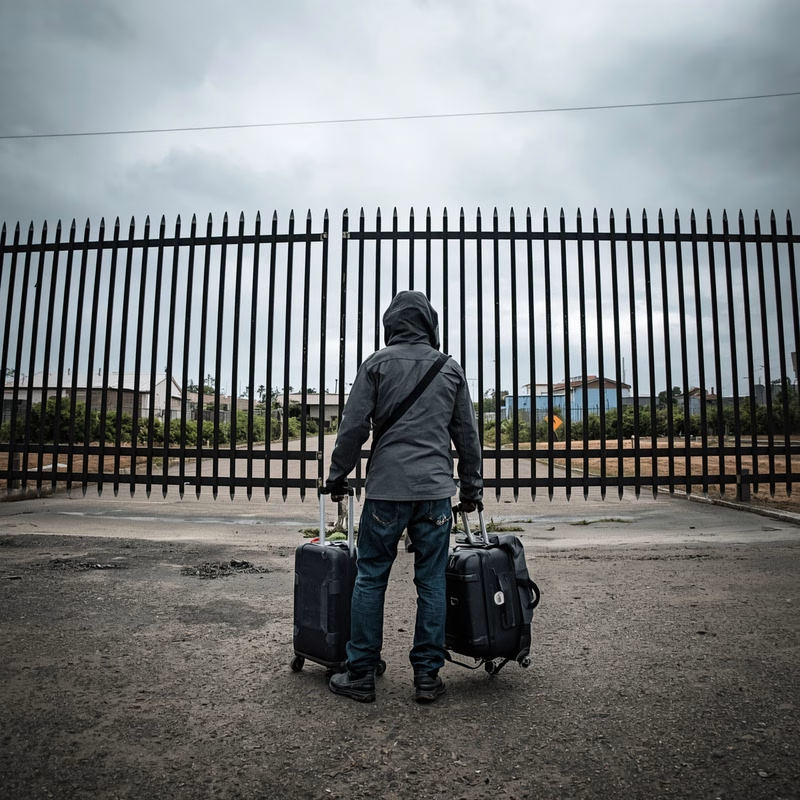
Yes, deported for drug possession is a real risk for non-citizens. Under federal immigration law:
- Any drug conviction (except for 30g or less of marijuana) can trigger deportation proceedings
- Aggravated felonies (including drug trafficking) result in mandatory deportation
- Even simple possession can make you inadmissible for visas or green cards
If you are not a U.S. citizen, deported for drug possession is a serious concern. Your drug possesion attorney (note spelling) must consider immigration consequences when advising on plea agreements.
What is the Punishment for Drug Possession with Intent?
The punishment for drug possession with intent is significantly harsher than simple possession:
Incarceration
- Misdemeanor possession – Up to 1 year in county jail
- Felony possession – 1-5 years in state prison
- Intent to distribute – 5-30+ years in state prison
- Trafficking – Mandatory minimums (3-25 years)
Fines
- Misdemeanor – Up to $1,000
- Felony – $5,000 to $10,000+
- Trafficking – $50,000 to $250,000+
Collateral Consequences
- Permanent criminal record
- Loss of driver’s license (6 months to 2 years)
- Loss of financial aid for students
- Difficulty finding employment and housing
- Immigration consequences for non-citizens
How a Drug Possession Lawyer in Palm Beach Can Help

A Drug Possession Lawyer in Palm Beach provides critical services:
Immediate Action
✅ Challenge probable cause for arrest
✅ Preserve evidence before it is lost or destroyed
✅ Request discovery to review the prosecution’s case
✅ File motions to suppress illegally obtained evidence
Negotiation and Defense
✅ Seek pretrial diversion or drug court admission
✅ Negotiate plea agreements to reduced charges
✅ Challenge intent to distribute assumptions
✅ Present mitigation evidence (employment, family, treatment)
Trial Representation
✅ Cross-examine witnesses effectively
✅ Challenge forensic evidence and lab results
✅ Present expert testimony when needed
✅ Argue for acquittal or reduced sentencing
Frequently Asked Questions
1. Can I get drug possession charges dropped without a lawyer?
Possibly, but unlikely. Prosecutors rarely dismiss cases without aggressive defense. An attorney for drug possession can identify weaknesses you would miss.
2. What’s the difference between possession and trafficking?
Possession involves personal use quantities. Trafficking involves specific weight thresholds that trigger mandatory minimum sentences, even for personal use.
3. How can a lawyer challenge intent to distribute?
We challenge the quantity (arguing it is for personal use), the presence of packaging materials, and the reliability of witness testimony.
4. What should I do immediately after a drug arrest?
Remain silent. Do not answer police questions. Request an attorney immediately. Do not consent to searches.
5. Do you handle drug possession cases throughout South Florida?
Yes. We serve all South Florida counties, including:
- Palm Beach County (West Palm Beach, Boca Raton, Jupiter)
- Broward County (Fort Lauderdale, Hollywood, Pembroke Pines)
- Miami-Dade County (Miami, Coral Gables, Hialeah)
Facing Drug Charges? Get Defense Help Now
If you’re facing drug possession charges or intent to distribute allegations, do not wait. Contact Dominique Russo at Russo Law & Advocacy for a free consultation. We serve clients across South Florida, including:
📍 Palm Beach County (West Palm Beach, Boca Raton, Jupiter)
📍 Broward County (Fort Lauderdale, Hollywood, Pembroke Pines)
📍 Miami-Dade County (Miami, Coral Gables, Hialeah)
“The difference between simple possession and intent to distribute can mean years of your life. We fight to challenge assumptions and protect your future.”