
Understanding Homicide and Murder in Florida
If you or a loved one is facing criminal charges related to a death, understanding the legal distinctions between different types of homicide is essential. A homicide lawyer specializes in defending clients against these most serious of all criminal charges. At Russo Law & Advocacy, Dominique Russo serves as a dedicated Homicide Lawyer in Palm Beach and across South Florida, providing aggressive representation at every stage of the case.
Many people use the terms homicide and murder interchangeably, but they are not the same. Understanding the different degrees of murders and how many types of homicide are there is critical for anyone facing allegations or seeking to understand the legal system. For a comprehensive overview of homicide defense in the region, see our page on West Palm Beach Homicide Lawyer.
What is Homicide? How Many Types of Homicide Are There?
Under Florida Statute § 782.04, homicide in Florida is the killing of one human being by another. However, not all homicides are crimes. Understanding what are the differences between the degrees of murders starts with recognizing the broader category of homicide.
4 Types of Homicide
There are generally 4 types of homicide recognized in Florida law:
| Type | Description | Criminal Liability |
|---|---|---|
| Justifiable Homicide | Killing in self-defense or defense of others (Stand Your Ground) | No criminal liability |
| Excusable Homicide | Accidental killing without negligence | No criminal liability |
| Murder | Intentional or felony-related killing | Criminal (felony) |
| Manslaughter | Reckless or negligent killing | Criminal (felony) |
A homicide attorney focuses primarily on defending clients accused of murder or manslaughter, while also establishing justifiable or excusable homicide defenses when applicable.
Degrees of Murder: First, Second, and Third Degree

What Are the Differences Between the Degrees of Murders?
The primary distinction between the different degrees of murders is the level of intent and premeditation involved.
| Degree | Mental State Required | Maximum Penalty |
|---|---|---|
| First Degree Murder | Premeditated intent to kill OR felony murder | Death penalty or life without parole |
| Second Degree Murder | Intentional killing without premeditation | Up to life imprisonment |
| Third Degree Murder | Killing resulting from certain non-violent felonies | Up to 15 years imprisonment |
First Degree Murder in Florida
First degree murder in Florida includes:
- Premeditated murder – A conscious decision to kill formed before the act
- Felony murder – Death occurs during commission of certain felonies (robbery, burglary, sexual battery, etc.)
- Capital murder – First-degree murder with aggravating factors (multiple victims, child victim, etc.)
Penalty: Death penalty or life imprisonment without parole.
Second Degree Murder in Florida
2nd degree murder in Florida involves an intentional killing that was not premeditated. The killing occurs in the heat of the moment but still with malice.
Difference between first second and third degree murders lies in intent and circumstances. Second degree lacks premeditation but requires intent to kill or cause great bodily harm.
2nd degree murders sentences in Florida: Up to life imprisonment, with no mandatory minimum.
Third Degree Murder in Florida
3rd degree murder in Florida occurs when a person kills another while committing a non-violent felony (not listed in the felony murder statute). It does not require intent to kill.
Difference between 2nd and 3rd degree murders: Second degree requires intent to kill or cause great bodily harm. Third degree requires only the commission of a non-violent felony that results in death.
Penalty: Up to 15 years imprisonment.
Florida Homicide Laws: Degrees of Murder Under FS § 782.04
First Degree Murder (FS § 782.04(1)(a))
- Premeditated killing – Evidence of planning or prior thought
- Felony murder – Death during enumerated felonies (robbery, burglary, arson, sexual battery, kidnapping, etc.)
- Capital felony – Death penalty eligible
Second Degree Murder (FS § 782.04(2))
- Intentional killing without premeditation
- Depraved mind murder – Extremely reckless disregard for human life
- First-degree felony – Up to life in prison
Third Degree Murder (FS § 782.04(4))
- Killing during non-enumerated felonies
- Second-degree felony – Up to 15 years in prison
Types of Degree Murders: Understanding the Levels

When people search for types of degree murders or different types of murder degrees, they are typically asking about the classification of murder by degree. Here is a simple breakdown:
| Degree | Intent | Premeditation Required? | Example |
|---|---|---|---|
| First Degree | Specific intent to kill | Yes | Planning a murder for weeks |
| Second Degree | Intent to kill or cause great harm | No | Fatal fight during an argument |
| Third Degree | No intent to kill | No | Death during drug delivery |
What is the Difference Between 2nd and 3rd Degree Murders?

Difference between 2nd and 3rd degree murders is one of the most common questions for those researching criminal law:
- Second degree murder requires intent to kill or cause great bodily harm, even if not premeditated
- Third degree murder requires no intent to kill; death results from commission of a non-violent felony
Example of Second Degree Murder: Two people get into a physical fight. One intentionally strikes the other with a heavy object, causing death. There was no planning, but there was intent to cause harm.
Example of Third Degree Murder: Someone illegally sells or delivers drugs (non-violent felony), and the buyer dies from an overdose. The seller did not intend to kill, but death resulted from the felony.
Levels of Homicide: From Justifiable to Capital Murder
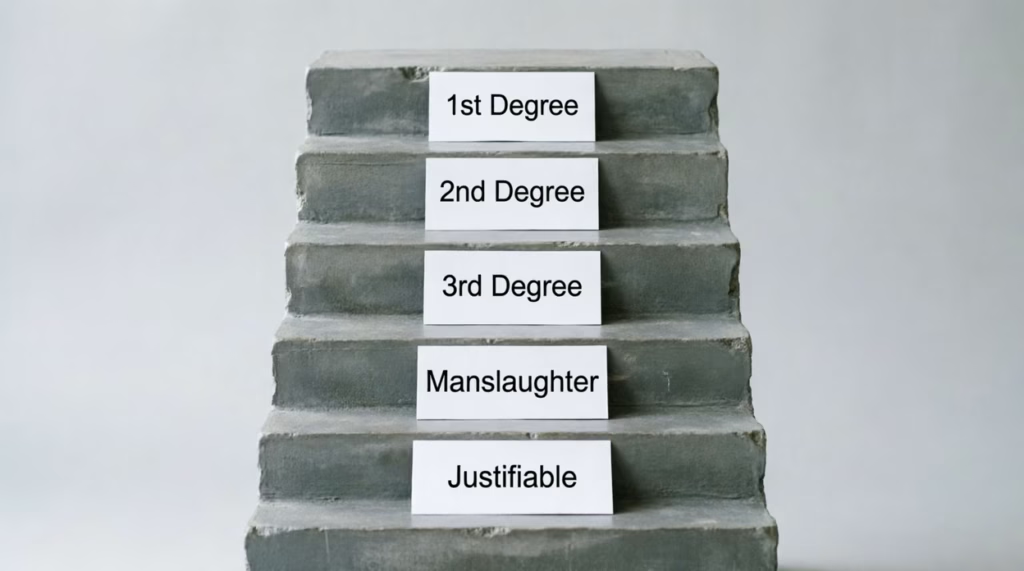
The levels of homicide can be visualized as a spectrum:
Least Severe → Most Severe
| Level | Example | Criminal Liability |
|---|---|---|
| Justifiable | Self-defense shooting | None |
| Excusable | Accidental death without negligence | None |
| Involuntary Manslaughter | Reckless driving causing death | Up to 15 years |
| Voluntary Manslaughter | Heat of passion killing | Up to 30 years |
| Third Degree Murder | Death during non-violent felony | Up to 15 years |
| Second Degree Murder | Intentional but unplanned killing | Up to life |
| First Degree Murder | Premeditated or felony murder | Death or life without parole |
Why You Need a Homicide Lawyer in Palm Beach
A Homicide Lawyer in Palm Beach provides critical advantages:
Understanding Complex Legal Distinctions
The difference between first second and third degree murders can mean the difference between life in prison and a shorter sentence. A skilled homicide attorney knows how to argue for reduced charges when evidence supports a lesser degree.
Challenging the Prosecution’s Case
- Attacking evidence of premeditation (to reduce first to second degree)
- Challenging intent (to reduce murder to manslaughter)
- Establishing self-defense or justifiable homicide
Negotiating Plea Agreements
In many cases, a homicide attorney negotiates with prosecutors to reduce charges from first-degree murder to second-degree or manslaughter, significantly reducing potential sentences.
Trial Experience
When cases go to trial, an experienced homicide lawyer presents complex forensic evidence, cross-examines expert witnesses, and argues for reasonable doubt.
Note: Attorney Dominique Russo is a former private investigator, turned defense attorney, bringing unique investigative skills to homicide cases.
Frequently Asked Questions
1. How many types of homicide are there in Florida?
Florida recognizes four main categories: justifiable homicide, excusable homicide, murder (first, second, and third degree), and manslaughter.
2. What is the difference between murder and manslaughter?
Murder requires malice or intent to kill. Manslaughter involves reckless or negligent acts without intent to kill.
3. What are the different degrees of murders?
First degree (premeditated or felony murder), second degree (intentional but not premeditated), and third degree (death during non-violent felony).
4. What is the sentence for second degree murder in Florida?
Up to life imprisonment. There is no mandatory minimum sentence.
5. Do you handle homicide cases throughout South Florida?
Yes. We serve all South Florida counties, including:
- Miami-Dade County (Miami, Coral Gables, Hialeah)
- Palm Beach County (West Palm Beach, Boca Raton, Jupiter)
- Broward County (Fort Lauderdale, Hollywood, Pembroke Pines)
Facing Homicide Charges? Get Defense Help Now
If you or a loved one is facing homicide allegations, understanding the types of degree murders and potential penalties is only the first step. Contact Dominique Russo at Russo Law & Advocacy for a free consultation. We serve clients across South Florida, including:
📍 Palm Beach County (West Palm Beach, Boca Raton, Jupiter)
📍 Broward County (Fort Lauderdale, Hollywood, Pembroke Pines)
📍 Miami-Dade County (Miami, Coral Gables, Hialeah)
“The difference between first, second, and third degree murder can mean decades of your life. We fight to ensure charges match the evidence and protect your rights.”