Understanding the Gravity of Felon in Possession of Firearm in Florida Charges
Florida maintains some of the nation’s strictest laws regarding firearm ownership, especially for individuals with prior felony convictions. The charge of a felon in possession of firearm in Florida is a serious offense, carrying severe penalties that can drastically alter one’s life. For anyone facing such allegations in South Florida, be it Palm Beach County, Miami-Dade County, or Broward County, understanding these complex statutes is paramount. Legal guidance from an experienced attorney like Dominique Russo is not just advisable; it’s essential.
This article delves into the intricacies of Florida’s laws concerning firearm possession by felons, exploring the legal definitions, potential penalties, and the critical importance of robust legal defense. We will also examine how these laws are applied and enforced across different South Florida jurisdictions, providing a localized perspective on this critical legal issue.
What Constitutes a Felon in Possession of a Firearm in Florida?
Under Florida Statute 790.23, it is unlawful for any person who has been convicted of a felony in the state of Florida, or any other state, or who has been convicted of a similar offense in another jurisdiction, to own, possess, or have in their care, custody, or control any firearm, ammunition, or electric weapon or device. This statute is broad, encompassing not just physical possession but also constructive possession, meaning the ability to exercise control over the firearm, even if it’s not directly on their person.
The definition of ‘felon’ includes anyone convicted of a felony, regardless of whether adjudication was withheld or if civil rights have been restored. The critical question often becomes: what disqualifies you from owning a gun? Beyond a felony conviction, certain domestic violence convictions, active restraining orders, and mental health adjudications can also prohibit firearm ownership, even for individuals without a felony record. However, for a ‘felon in possession’ charge, the prior felony is the central element.
Penalties for Felon with Gun in Florida: How Long Can You Go to Jail?
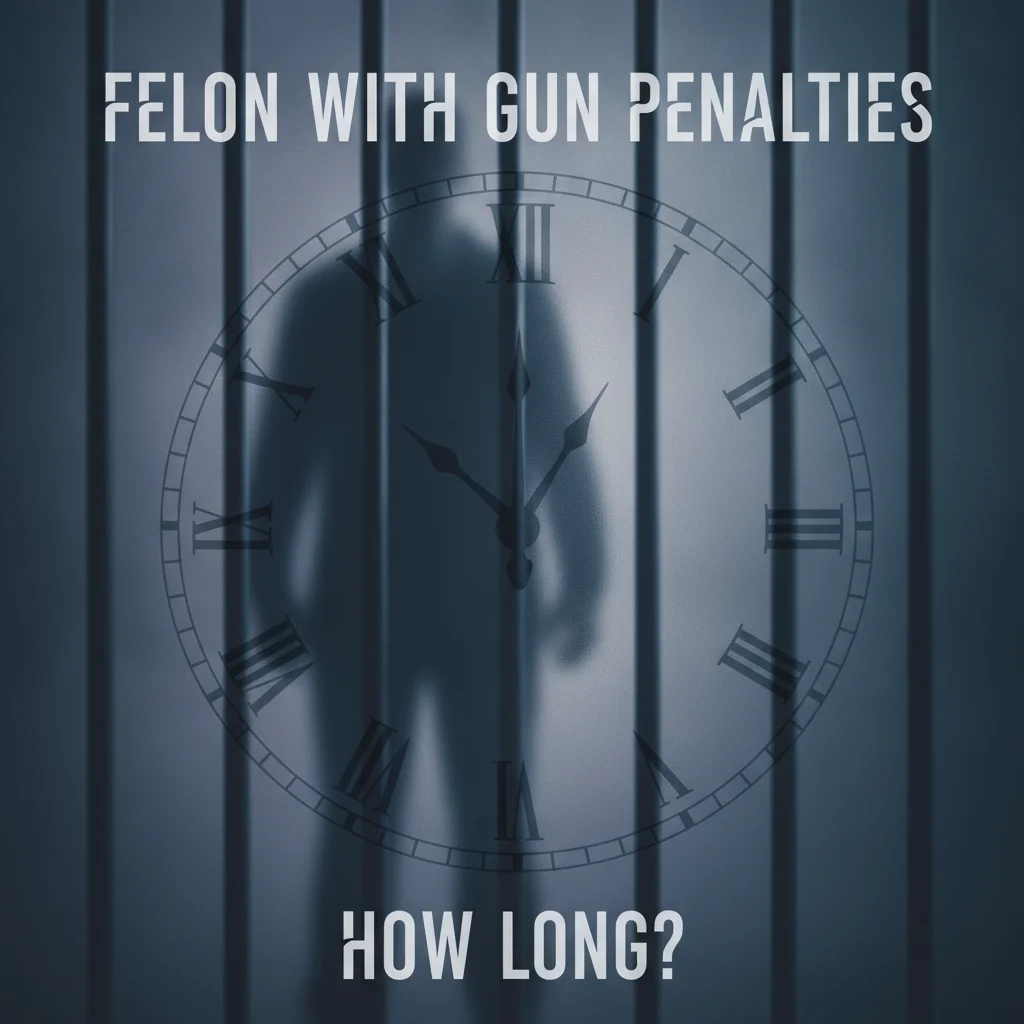
The consequences for a felon with possession of a firearm in Florida are severe. This offense is typically classified as a second-degree felony, which carries a maximum penalty of up to 15 years in state prison and a fine of up to $10,000. However, depending on the circumstances and the individual’s criminal history, the penalties can be significantly enhanced.
Florida Statute 775.082 outlines the general penalties for felonies. For a second-degree felony, judges have discretion within the statutory limits, but mandatory minimum sentences can apply in certain situations, especially if the firearm was used in the commission of another crime or if the defendant has a history of violent offenses. Understanding how long can you go to jail for having a gun as a felon requires a detailed review of the specific facts of the case and the defendant’s criminal record.
| Felony Classification | Maximum Prison Sentence | Maximum Fine |
|---|---|---|
| Third-Degree Felony | 5 years | $5,000 |
| Second-Degree Felony (Standard for Felon in Possession) | 15 years | $10,000 |
| First-Degree Felony | 30 years to Life | $10,000 |
| Life Felony | Life | $15,000 |
The Impact of Habitual Offender Status
For individuals with a history of felony convictions, the stakes are even higher. Florida’s Habitual Felony Offender statute, 775.084, allows for significantly enhanced sentences. If a person is designated as a habitual offender, the court can impose a prison sentence up to 30 years for a second-degree felony, effectively doubling the maximum standard penalty. This designation is typically applied to individuals with two or more prior felony convictions.
Understanding what is habitual offender status and its implications is crucial. It means that not only are the felon with gun penalties severe, but repeat offenders face an even greater risk of lengthy incarceration. This is why a strategic defense is paramount from the outset.
Local Enforcement & Legal Nuances Across South Florida

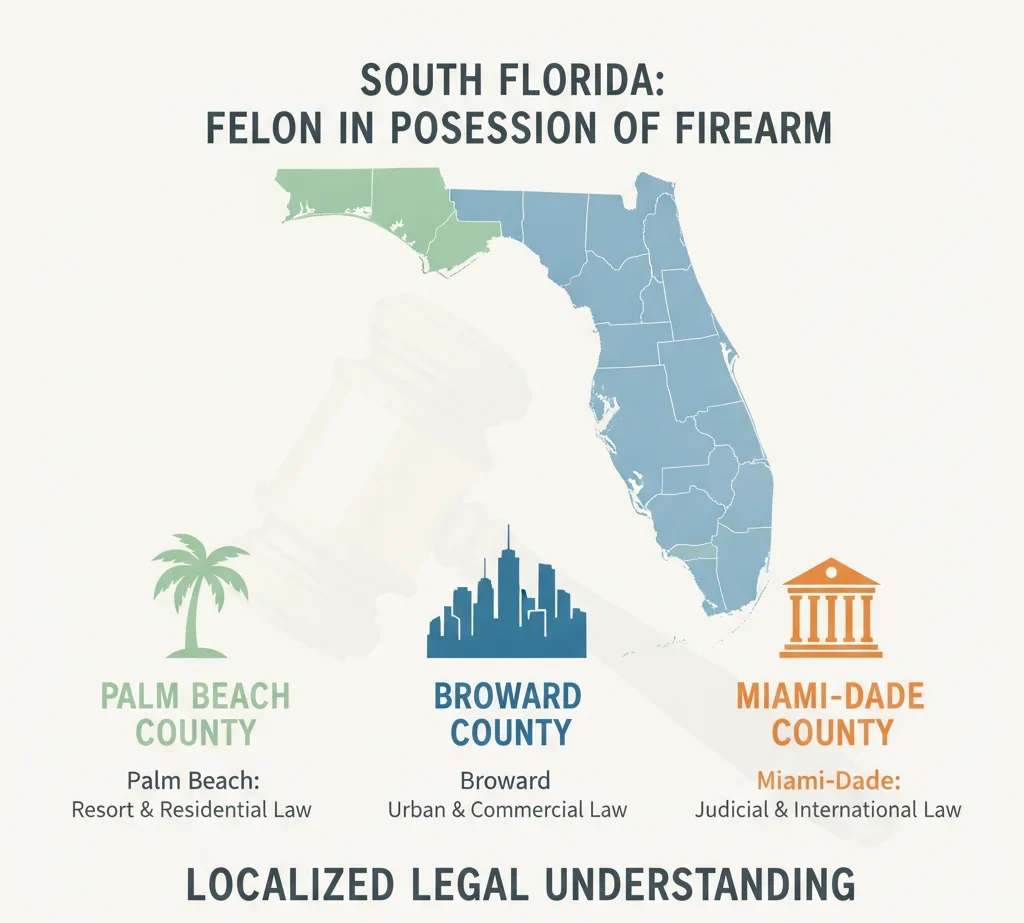
While Florida’s laws are uniform statewide, their application and the local judicial climate can vary significantly across different counties. Dominique Russo understands these regional differences, offering tailored defense strategies for clients in Palm Beach, Miami-Dade, and Broward Counties.
Palm Beach County: Navigating Firearms Laws
Palm Beach County, known for its diverse communities ranging from urban centers like West Palm Beach to affluent areas like Boca Raton and Jupiter, sees a broad spectrum of criminal cases. Law enforcement agencies here, including the Palm Beach County Sheriff’s Office and municipal police departments, are vigilant about enforcing firearm laws. Prosecutors in Palm Beach County often take a firm stance on cases involving a felon in possession of firearm in Florida, especially given the county’s demographics and focus on public safety. For instance, a traffic stop in West Palm Beach that uncovers a firearm in a vehicle driven by a convicted felon could quickly escalate into a serious felony charge, demanding immediate legal intervention.
Miami-Dade County: A Complex Legal Landscape
Miami-Dade County, Florida’s most populous county, presents a unique and often complex legal environment. The sheer volume of cases, coupled with a diverse population and a busy court system, means that cases involving possession of a firearm by felon are common. The Miami-Dade Police Department and other local agencies are highly active. The judicial circuits here are accustomed to high-stakes criminal litigation. For example, an individual with a prior felony conviction found with a firearm during a stop-and-frisk in a high-crime area of Miami or Hialeah could face an aggressive prosecution, where the nuances of constructive possession might be hotly contested. Dominique Russo’s familiarity with the Miami-Dade legal system is invaluable.
Broward County: Understanding Local Enforcement
Broward County, home to Fort Lauderdale, Hollywood, and Pembroke Pines, also maintains a rigorous approach to firearm offenses. The Broward Sheriff’s Office and various city police departments are proactive in enforcing gun laws. The courts in Broward County are known for their efficiency but also for their strict adherence to sentencing guidelines, particularly for repeat offenders. A scenario in Fort Lauderdale, where a felon is found with a weapon during a domestic disturbance call, would likely lead to immediate arrest and a strong push for maximum penalties, highlighting the need for an attorney well-versed in Broward County’s legal culture.
| Aspect | Palm Beach County | Miami-Dade County | Broward County |
|---|---|---|---|
| Population Density | Medium-High | Very High | High |
| Judicial Caseload | Substantial | Extremely High | High |
| Enforcement Focus | Public Safety & Order | Crime Reduction in Urban Areas | Community Safety & Repeat Offenders |
| Defense Strategy Nuance | Focus on mitigating circumstances, local court procedures | Navigating high-volume system, complex evidentiary rules | Addressing prior record impact, plea negotiation |
Defending Against a Possession of a Firearm by Felon Charge
Facing a charge of felon in possession of firearm in Florida requires an immediate and aggressive defense strategy. Common defense approaches can include:
- Challenging Possession: Arguing that the defendant did not have actual or constructive possession of the firearm. This might involve demonstrating that the firearm belonged to someone else, or that the defendant was unaware of its presence.
- Lack of Knowledge: Proving that the defendant did not know the item was a firearm or that they were prohibited from possessing it.
- Illegal Search and Seizure: If the firearm was discovered through an unlawful search, the evidence might be suppressed.
- Restoration of Rights: In some rare cases, if civil rights were fully restored and the right to possess firearms was explicitly reinstated, this could be a defense.
The complexities of these cases, particularly when dealing with evidence collection, legal precedents, and negotiation with prosecutors, underscore the absolute necessity of experienced legal representation. An attorney can meticulously review the evidence, identify weaknesses in the prosecution’s case, and advocate fiercely on your behalf. For more insights on defense strategies, consider reading about how to beat a gun charge in Florida or understanding the implications of carrying a concealed weapon without a permit.
Legal Disclaimer: The information provided in this article is for general informational purposes only and does not constitute legal advice. Laws are subject to change, and the application of the law depends on the specific facts of each case. You should consult with a qualified attorney for advice regarding your individual situation.
Frequently Asked Questions (FAQ) about Understanding Florida’s Firearm Laws
What does ‘felon in possession of firearm in Florida’ specifically mean?
It means that any individual who has been convicted of a felony, whether in Florida or another jurisdiction, is prohibited by Florida Statute 790.23 from owning, possessing, or having control over any firearm, ammunition, or electric weapon. This prohibition applies even if their civil rights have been restored, unless the right to possess firearms was specifically reinstated.
How long can you go to jail for having a gun as a felon in Florida?
A conviction for a felon in possession of a firearm is typically a second-degree felony, carrying a maximum sentence of 15 years in state prison and a $10,000 fine. However, factors like prior criminal history, habitual offender status, or the circumstances of the offense can lead to enhanced penalties, potentially extending incarceration to 30 years or more.
What disqualifies you from owning a gun in Florida besides a felony?
Beyond a felony conviction, other factors that can disqualify someone from owning a gun in Florida include certain misdemeanor convictions (especially domestic violence), active domestic violence injunctions or restraining orders, and specific mental health adjudications. Federal law also imposes additional restrictions that Florida adheres to.
What are the penalties for a felon with gun in Florida if they are a habitual offender?
If designated as a ‘habitual offender’ under Florida Statute 775.084, the maximum prison sentence for a second-degree felony like felon in possession of a firearm can be increased from 15 years to 30 years. This status is typically applied to individuals with multiple prior felony convictions, significantly escalating the potential consequences.
How does ‘possession of a firearm by felon’ differ in Palm Beach, Miami-Dade, and Broward Counties?
While the state law remains the same, the enforcement and judicial approach can vary. Palm Beach County often focuses on public safety, Miami-Dade County deals with high-volume urban crime, and Broward County emphasizes community safety and repeat offender accountability. An experienced attorney like Dominique Russo understands these local nuances to build a stronger defense.
Get a Lawyer for Gun Charges Now
If you or a loved one is facing charges related to a felon in possession of firearm in Florida, the time to act is now. The legal ramifications are severe, and navigating the justice system without expert representation can have devastating consequences. Contact Dominique Russo at Russo Law & Advocacy for an initial consultation. We serve clients across South Florida, including:
- Palm Beach County (West Palm Beach, Boca Raton, Jupiter)
- Broward County (Fort Lauderdale, Hollywood, Pembroke Pines)
- Miami-Dade County (Miami, Coral Gables, Hialeah)