Probation Violation Hearing: What to Expect in Court
Facing a probation violation hearing can be an intimidating experience, fraught with uncertainty about your future and potential legal consequences. Whether you are in Palm Beach County, Miami-Dade County, or Broward County, understanding the process is crucial. A probation violation occurs when an individual fails to comply with the specific conditions set forth by the court as part of their probation sentence. This article, guided by the expertise of legal professionals like Dominique Russo, aims to demystify the court proceedings, outline your rights, and prepare you for what to expect.
The stakes are high in a probation violation hearing, as the outcome could range from a simple warning to significant penalties, including incarceration. Knowing the steps involved, from the initial allegations to the judge’s final decision, empowers you to navigate this challenging time more effectively. With proper legal guidance, you can build a robust defense and work towards the most favorable resolution possible.

Understanding the Probation Violation Hearing Process
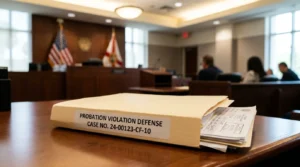
A probation violation hearing, sometimes referred to as a probation revocation hearing or a revocation hearing for probation, is a formal court proceeding initiated when your probation officer or the State Attorney’s Office alleges that you have violated one or more conditions of your probation. These conditions can vary widely, from failing to report to your probation officer or missing court-ordered classes to committing a new offense.
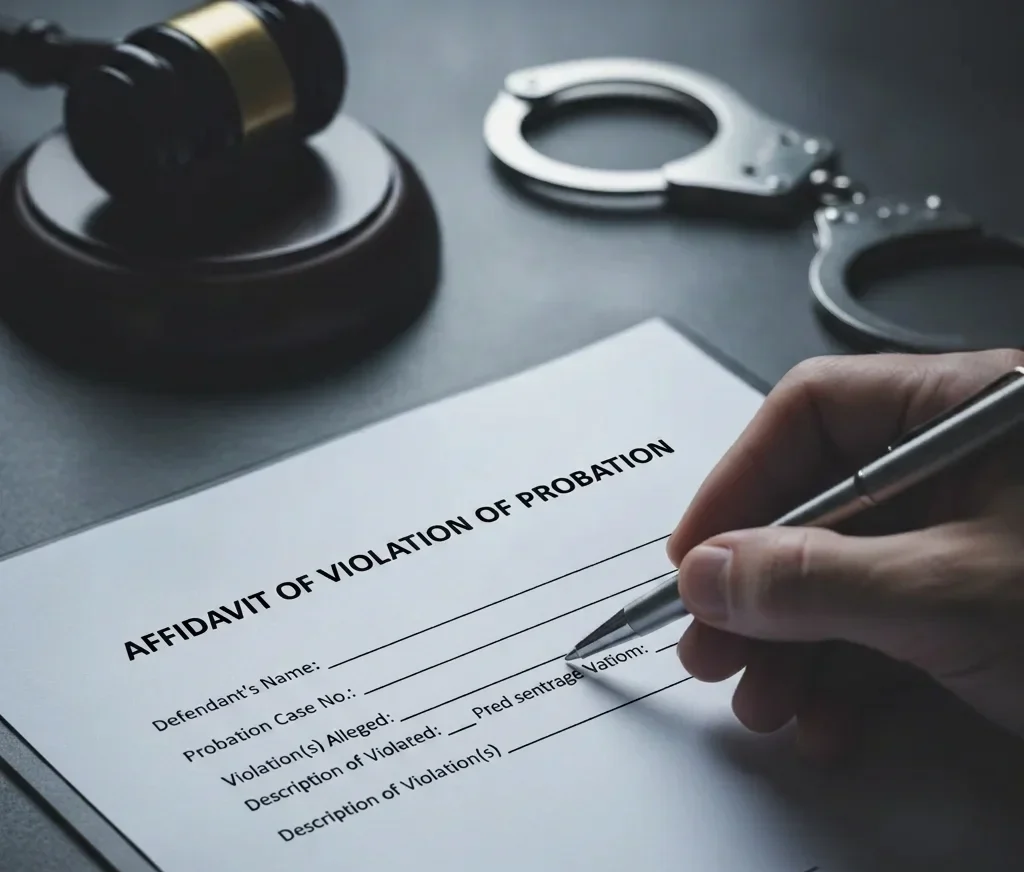
The process typically begins when your probation officer files an Affidavit of Violation of Probation with the court. Based on this affidavit, a judge may issue a warrant for your arrest. Once arrested, you will be held until a bond hearing or the probation violation hearing itself. It is critical to secure legal representation as early as possible during this phase.
What Triggers a Probation Revocation Hearing?
Triggers for a probation revocation hearing can be broadly categorized into two types: technical violations and substantive violations. Technical violations involve failing to adhere to the administrative rules of probation, such as:
- Missing an appointment with your probation officer.
- Failing to pay court costs, fines, or restitution.
- Not completing community service hours.
- Failing a drug test.
- Changing residence without permission.
Substantive violations, on the other hand, involve committing a new crime while on probation. This is considered a more serious violation and often carries harsher penalties. Regardless of the type of violation, the court will require a hearing to determine if a violation occurred and what the appropriate response should be.
Your Probationer Rights During a Revocation Hearing for Probation
Even when facing a revocation hearing for probation, you retain important probationer rights. These rights are fundamental to ensuring a fair process, even though the standard of proof is lower than in an initial criminal trial. In Florida, the State only needs to prove a violation by a ‘preponderance of the evidence,’ meaning it is more likely than not that you violated your probation.
Key rights include:
- Right to Legal Counsel: You have the right to be represented by a probation violation lawyer. This is paramount, as an experienced attorney can challenge allegations, present mitigating evidence, and negotiate with the prosecution.
- Right to Notice: You must be informed of the specific allegations against you in writing. This allows you and your attorney to prepare a defense.
- Right to Present Evidence: You have the right to call witnesses, present documents, and offer other evidence to rebut the allegations.
- Right to Confront Witnesses: You can cross-examine witnesses presented by the prosecution, including your probation officer.
- Right to Speak: You have the opportunity to speak on your own behalf, although this should always be done with the advice of your attorney.
Key Differences in Probation Regulations Across South Florida Counties
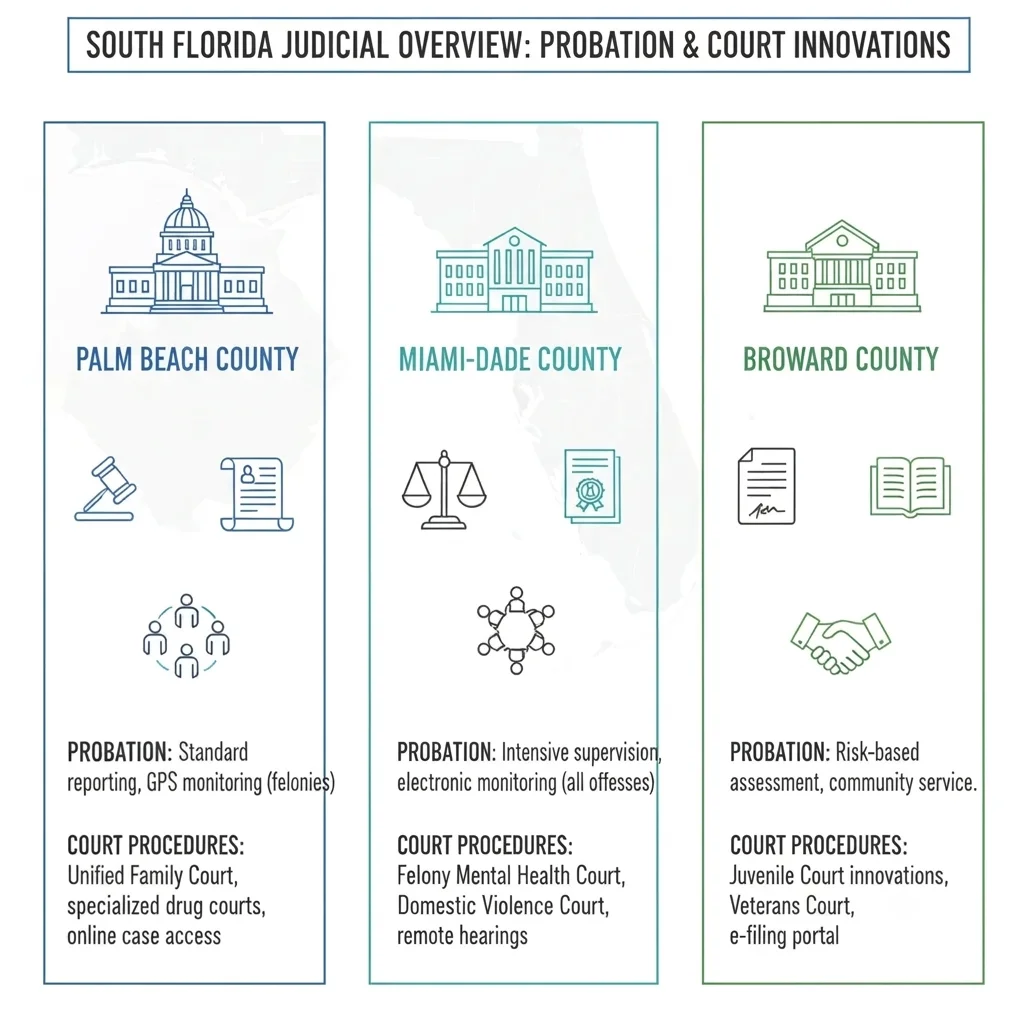
While Florida Statutes govern probation statewide, the practical application and emphasis on certain probation regulations can vary slightly between judicial circuits and even individual probation offices. In South Florida, Palm Beach County, Miami-Dade County, and Broward County each have their unique characteristics in how probation is managed and violations are addressed.
For instance, in Palm Beach County, courts may sometimes emphasize rehabilitation programs more heavily for technical violations, particularly for first-time offenders, aiming to provide resources rather than immediate incarceration. Miami-Dade County, given its large and diverse population, often sees a higher volume of cases, which can sometimes lead to more standardized procedures, but also a robust system of specialized courts. Broward County, known for its proactive community programs, might offer specific diversion programs or intensive supervision options as alternatives to revocation for certain violations.
Understanding these local nuances is where a knowledgeable probation violation lawyer like Dominique Russo becomes invaluable. They can leverage their familiarity with local court personnel, judges, and probation departments to advocate effectively on your behalf.
| Aspect of Probation | Palm Beach County | Miami-Dade County | Broward County |
|---|---|---|---|
| Initial Reporting Emphasis | Strict adherence to initial contact, often with specific orientation sessions. | High volume, standardized initial reporting process, sometimes with digital components. | Focus on early engagement with probation officers and community resources. |
| Common Court Dispositions for Technical Violations | Reinstatement with modified conditions or additional sanctions (e.g., classes). | Often a balance of reinstatement, brief jail time, or community service. | Emphasis on program completion, sometimes utilizing specialized courts for specific issues. |
| Local Resources for Compliance | Strong network of substance abuse and mental health services. | Extensive range of social services and educational programs due to population size. | Robust community-based programs and partnerships with local non-profits. |
Potential Outcomes and Jail Time for Probation Violation
The outcome of a probation violation hearing is not predetermined. The judge has significant discretion in deciding the appropriate response, which can range from lenient to severe, depending on the nature of the violation, your probation history, and the arguments presented by your probation violation lawyer.
Possible outcomes include:
- Reinstatement of Probation: The judge may decide to continue your probation under the original terms, perhaps with a stern warning.
- Modification of Probation: New conditions might be added, or existing ones altered. This could include extended probation time, additional counseling, increased reporting, or stricter curfews.
- Revocation of Probation: This is the most severe outcome. If your probation is revoked, the judge can impose any sentence that could have been originally imposed for the underlying crime. This often means jail time for probation violation, potentially for the maximum statutory period.
For more detailed information on potential incarceration, you can Read more → about how much jail time you might face. Additionally, understanding the broader implications of violating probation in Florida is crucial; Read more → about what happens when you violate probation in Florida.
| Type of Violation | Example Scenario | Potential Consequence (General) |
|---|---|---|
| Technical Violation (Minor) | Missed one scheduled meeting with probation officer in Broward County. | Probation reinstated with a warning, possibly extended probation period. |
| Technical Violation (Serious) | Failed multiple drug tests in Miami-Dade County, indicating continued substance use. | Mandatory drug treatment, brief jail time, or modification to intensive supervision. |
| Substantive Violation | Arrested for a new misdemeanor offense (e.g., petty theft) in Palm Beach County. | Probation revocation, leading to sentencing for the original offense, often involving jail or prison time. |
The Role of a Probation Violation Lawyer
Given the complexities and potential severe outcomes, securing a skilled probation violation lawyer is not merely advisable but essential. An attorney can:
- Review the Allegations: Scrutinize the Affidavit of Violation for accuracy and legal sufficiency.
- Gather Evidence: Collect evidence to dispute the allegations or present mitigating circumstances.
- Negotiate: Work with the prosecution and probation officer to reach a favorable agreement, such as reinstatement or modification, avoiding a full probation violation hearing.
- Represent You in Court: Advocate on your behalf, cross-examine witnesses, and present your case to the judge.
- Advise on Rights: Ensure your probationer rights are protected throughout the process.
Dominique Russo and the team at Russo Law & Advocacy possess extensive experience defending clients facing probation violation hearings across South Florida, including Palm Beach, Miami-Dade, and Broward Counties. Their deep understanding of local court procedures and what are the probation rules in these jurisdictions can make a significant difference in your case.
Florida Statutes Governing Probation Violations
The legal framework for probation violations in Florida is primarily outlined in Chapter 948 of the Florida Statutes. Specifically, Florida Statute 948.06 addresses ‘Violation of probation or community control; revocation; modification; continuance; adjudication of guilt.’ This statute details the procedures the court must follow when a violation is alleged, including the requirement for a hearing and the judge’s authority to revoke, modify, or continue probation. Understanding these statutes is fundamental to comprehending your legal standing and the court’s powers. You can review the full text of the Florida Statute 948.06 here.
Legal Disclaimer: This article provides general information and is not intended as legal advice. The specifics of your case may vary, and you should always consult with a qualified attorney for advice tailored to your individual circumstances.
Frequently Asked Questions (FAQ) about The Probation Violation Hearing
What is a probation violation hearing?
A probation violation hearing is a formal court proceeding where a judge determines if an individual has failed to comply with the conditions of their probation. It is initiated by an affidavit from a probation officer or the State Attorney’s Office alleging specific violations.
What are my probationer rights during this hearing?
You have several important probationer rights, including the right to legal counsel, the right to be informed of the allegations, the right to present evidence, and the right to confront witnesses against you. It is crucial to exercise these rights by having an experienced attorney represent you.
Can I get jail time for probation violation?
Yes, jail time for probation violation is a very real possibility. If the judge finds that you violated your probation, they can revoke your probation and sentence you to any penalty that could have been imposed for the original offense, which often includes incarceration.
What is the difference between a technical and substantive violation?
A technical violation involves failing to follow the administrative rules of probation (e.g., missing an appointment, failing a drug test). A substantive violation means committing a new crime while on probation. Substantive violations are generally viewed more seriously by the courts.
How can a probation violation lawyer help me?
A probation violation lawyer can provide invaluable assistance by reviewing your case, gathering evidence, negotiating with the prosecution, and representing you effectively in court. Their expertise can help protect your rights and work towards a more favorable outcome, potentially avoiding probation revocation.
Get a Defense Attorney Now
If you are facing a probation violation hearing in Palm Beach County, Miami-Dade County, or Broward County, do not face it alone. The consequences can be severe, impacting your freedom and future. Expert legal representation is essential to protect your rights and navigate the complexities of the legal system.
Contact Dominique Russo at Russo Law & Advocacy for a free consultation. We serve clients across South Florida, including:
- Palm Beach County (West Palm Beach, Boca Raton, Jupiter)
- Broward County (Fort Lauderdale, Hollywood, Pembroke Pines)
- Miami-Dade County (Miami, Coral Gables, Hialeah)
Let Dominique Russo provide the experienced and dedicated defense you deserve when dealing with a probation violation hearing.