Understanding the Post Conviction Relief Petition Process in Florida
Navigating the complexities of the legal system after a conviction can be daunting. For individuals who believe their conviction or sentence was unjust or legally flawed, a post conviction relief petition offers a crucial pathway to seek justice. This legal mechanism allows for a review of a case after the direct appeal process has concluded, addressing issues that were not, or could not have been, raised during the initial trial or appeal. Criminal Defense Attorney Dominique Russo understands the profound impact a conviction can have on an individual’s life and is dedicated to providing robust legal representation for those seeking to challenge their judgments.
Unlike a direct appeal, which focuses on errors made by the trial court, a post conviction relief petition delves into issues outside the trial record, such as ineffective assistance of counsel, newly discovered evidence, or constitutional violations. This article will explore what a post conviction relief petition entails, the process involved, and how a skilled legal professional can make a significant difference in securing a favorable outcome, particularly in the diverse legal landscapes of Palm Beach County, Miami-Dade County, and Broward County.
What is Post Conviction Relief? Defining the Post Conviction Relief Petition
At its core, post conviction relief is a legal remedy available to individuals who have been convicted of a crime and have exhausted their direct appeal rights, or for issues that could not be raised on direct appeal. It’s a critical tool for challenging the legality of a conviction or sentence based on constitutional grounds or other fundamental errors. The most common form of this relief in Florida is through a motion filed under Florida Rule of Criminal Procedure 3.850.
This process is distinct from criminal appeals. While direct appeals review the trial court’s record for legal errors, post-conviction relief focuses on issues such as:
- Ineffective Assistance of Counsel: When a defendant’s attorney performed so poorly that it prejudiced the outcome of the case.
- Newly Discovered Evidence: Evidence that was not available at the time of trial and would likely have changed the verdict.
- Illegal Sentence: A sentence that exceeds the maximum allowed by law or is otherwise unlawful.
- Constitutional Violations: Such as violations of due process, coerced confessions, or prosecutorial misconduct.
- Wrongful Conviction: Cases where new evidence or legal errors demonstrate the defendant’s innocence.
Understanding what is post conviction relief is the first step toward potentially overturning an unjust outcome. It requires a deep understanding of both procedural rules and substantive law.
The Process of Filing a Post Conviction Relief Petition
Filing a post conviction relief petition is a meticulous and time-sensitive process. In Florida, motions under Rule 3.850 generally must be filed within two years after the judgment and sentence become final, though there are limited exceptions for newly discovered evidence or changes in the law. Missing this deadline can permanently bar an individual from seeking relief.
The process typically involves:
- Investigation: Gathering all relevant documents, transcripts, and evidence, including seeking out new evidence or witness statements.
- Drafting the Petition: Preparing a detailed legal document outlining the specific grounds for relief, supported by facts and legal arguments. This requires precision and a thorough understanding of case law.
- Filing: Submitting the petition to the appropriate court.
- State’s Response: The prosecution will have an opportunity to respond to the petition.
- Evidentiary Hearing: If the court finds that the petition raises a legally sufficient claim and the record does not conclusively refute it, an evidentiary hearing may be scheduled. This is where new evidence can be presented and witnesses can testify.
- Court’s Decision: The court will issue a ruling, either granting or denying the relief sought.
- Appeal: If the petition is denied, the decision can often be appealed to a higher court.
How Long Does Post Conviction Relief Take?
One of the most common questions individuals have is, how long does post conviction relief take? The timeline can vary significantly depending on the complexity of the case, the specific grounds raised, the court’s docket, and whether an evidentiary hearing is required. Simple cases might be resolved within a year, while more complex cases involving extensive investigation or multiple appeals could take several years. Patience and persistent legal advocacy are key throughout this extended process.
Navigating Post Conviction Relief in South Florida: Palm Beach, Miami-Dade, and Broward Counties
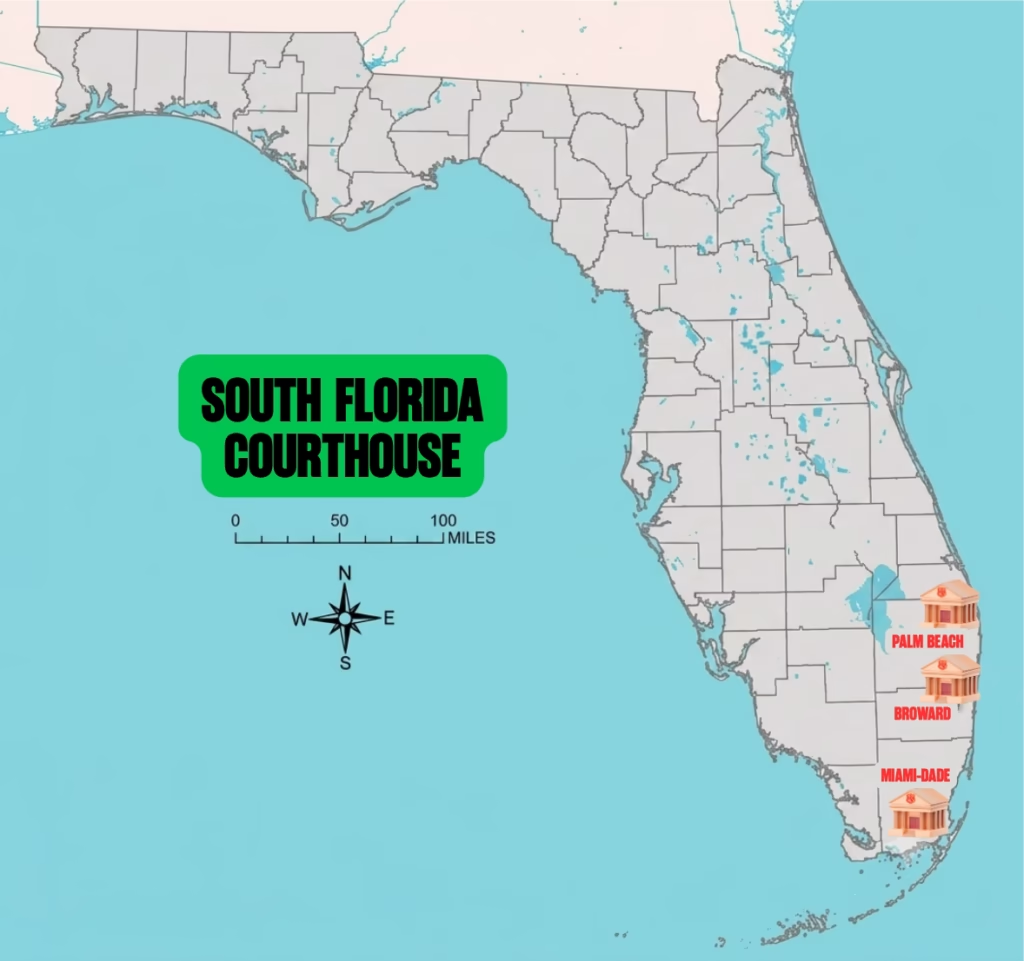
South Florida presents a unique legal landscape, with each county having its own nuances in court procedures and judicial approaches. Whether you are in Palm Beach County, Miami-Dade County, or Broward County, the fundamental principles of a post conviction relief petition remain the same, but local practices can influence the process.
Palm Beach County Specifics
Palm Beach County, home to the 15th Judicial Circuit, is known for its diverse population and a court system that handles a significant volume of cases. For those seeking a post conviction relief attorney here, understanding the local court’s preferences and the specific judges involved can be advantageous. The county’s legal community, including experienced criminal appeals attorney, is well-versed in the intricate details of post-conviction law.
Miami-Dade County Specifics
Miami-Dade County, encompassing the 11th Judicial Circuit, is the most populous county in Florida, leading to a high volume of criminal cases and, consequently, post-conviction filings. The sheer scale can sometimes mean longer processing times, but also a wealth of legal precedent. A skilled criminal immigration lawyer in Florida might also be crucial here, given the county’s large immigrant population and the potential immigration consequences of criminal convictions. Attorney Dominique Russo has extensive experience navigating the Miami-Dade court system.
Broward County Specifics
Broward County, part of the 17th Judicial Circuit, balances the high volume of Miami-Dade with the more suburban feel of Palm Beach. The courts here are accustomed to handling complex criminal matters, including those involving allegations of wrongful conviction. Having a local post conviction relief attorney who understands the specific judicial tendencies and local rules of the Broward County courts is invaluable.
Here’s a comparison of some considerations across these South Florida counties:
| Aspect | Palm Beach County (15th Circuit) | Miami-Dade County (11th Circuit) | Broward County (17th Circuit) |
|---|---|---|---|
| Population Density | High | Very High | High |
| Case Volume | Substantial | Extremely High | Very High |
| Judicial Approach | Varied, often pragmatic | Diverse, precedent-heavy | Balanced, focused on procedure |
| Unique Considerations | Growing legal community, diverse socio-economic factors. | International influences, significant immigration law intersections. | Strong focus on rehabilitation programs, robust public defender system. |
How to Win Post Conviction Relief: The Role of a Skilled Attorney
Successfully navigating a post conviction relief petition is exceptionally challenging and rarely achieved without experienced legal counsel. The standards for relief are high, and the procedural hurdles are numerous. This is where a dedicated post conviction relief attorney becomes indispensable. They possess the expertise to:
- Identify all potential grounds for relief.
- Conduct thorough investigations, often uncovering details missed in the original trial.
- Draft compelling legal arguments supported by relevant case law and statutes.
- Represent clients effectively in evidentiary hearings.
- Handle subsequent appeals if the initial petition is denied.
For individuals facing a potential wrongful conviction, the stakes are incredibly high. Wrongful conviction lawyers like Dominique Russo are not just legal advocates; they are champions for justice, meticulously reviewing every detail to ensure that fundamental rights were upheld and that the conviction is legally sound.
Consider the stark differences when pursuing post-conviction relief:
| Aspect | Self-Representation | With a Post Conviction Relief Attorney |
|---|---|---|
| • Legal Knowledge | • Limited understanding of complex rules • Difficulty interpreting statutes and case law | • In-depth knowledge of Florida Rules of Criminal Procedure • Expertise in constitutional law and appellate precedent |
| • Investigation & Evidence | • Lack of resources for thorough investigation • Challenges in obtaining records and witness testimony | • Access to investigative tools and experts • Ability to subpoena records and interview witnesses effectively |
| • Procedural Compliance | • High risk of procedural errors and missed deadlines • Petitions often dismissed on technicalities | • Meticulous adherence to court rules and deadlines • Strategic filing to maximize chances of success |
| • Courtroom Advocacy | • Limited ability to present arguments persuasively • Emotional challenges in self-advocacy | • Skilled oral advocacy in hearings • Objective and strategic presentation of the case |
Applicable Florida Statutes and Rules for Post Conviction Relief

The legal framework for a post conviction relief petition in Florida is primarily governed by the Florida Rules of Criminal Procedure. Understanding these rules is paramount for anyone considering this path:
- Florida Rule of Criminal Procedure 3.850 – Motion to Vacate, Set Aside, or Correct Sentence: This is the primary rule allowing a person to challenge their conviction or sentence after it has become final. It addresses issues such as ineffective assistance of counsel, newly discovered evidence, and illegal sentences. View Florida Rule 3.850
- Florida Rule of Criminal Procedure 3.800 – Correction, Reduction, and Modification of Sentences: This rule allows for the correction of illegal sentences at any time, or the reduction/modification of legal sentences within a specific timeframe. View Florida Rule 3.800
- Florida Rule of Criminal Procedure 3.853 – Postconviction DNA Testing: This rule specifically addresses motions for postconviction DNA testing, which can be critical in cases of potential wrongful conviction. View Florida Rule 3.853
These rules are complex and subject to judicial interpretation. A seasoned criminal appeals attorney will be intimately familiar with these statutes and their application.
Seeking Justice with a Post Conviction Relief Attorney

The path to obtaining a successful post conviction relief petition is arduous and filled with legal intricacies. It demands not only a profound understanding of the law but also meticulous attention to detail, strategic thinking, and unwavering advocacy. Whether you are facing a potential wrongful conviction in Palm Beach County, navigating complex legal issues in Miami-Dade County, or seeking to challenge a sentence in Broward County, the expertise of a dedicated legal professional is paramount.
Attorney Dominique Russo brings over a decade of experience to the table, offering compassionate yet aggressive representation for individuals seeking post-conviction relief. Her commitment to justice and her comprehensive knowledge of Florida’s criminal procedure rules make her an invaluable ally in these challenging cases. Don’t face this complex legal battle alone. Secure the experienced representation you need to pursue the justice you deserve.
Legal Disclaimer: The information provided in this article is for general educational purposes only and does not constitute legal advice. The law is complex and constantly evolving, and the application of legal principles to specific facts varies. Always consult with a qualified attorney for advice regarding your individual situation. An attorney-client relationship is not formed by reading this article.
Frequently Asked Questions (FAQ) about Post Conviction Relief Petitions
What is the primary purpose of a post conviction relief petition?
The primary purpose of a post conviction relief petition is to challenge a conviction or sentence after the direct appeal process has concluded, based on issues that were not or could not have been raised during the trial or direct appeal. This often includes constitutional violations or ineffective assistance of counsel.
How does a post conviction relief petition differ from a criminal appeal?
A criminal appeal reviews the trial court’s record for legal errors made during the proceedings. In contrast, a post conviction relief petition typically addresses issues outside the trial record, such as newly discovered evidence, ineffective assistance of counsel, or fundamental constitutional rights violations that were not litigated previously.
What are common grounds for filing a post conviction relief petition?
Common grounds include ineffective assistance of trial or appellate counsel, newly discovered evidence that would have likely changed the verdict, an illegal sentence, or violations of constitutional rights that affected the fairness of the trial. These grounds must be specifically articulated and supported by evidence.
Is there a time limit to file a post conviction relief petition in Florida?
Yes, in Florida, a post conviction relief petition under Rule 3.850 generally must be filed within two years after the judgment and sentence become final. There are limited exceptions to this deadline, such as for newly discovered evidence or certain changes in the law, but these are narrowly construed.
Why is it important to hire a post conviction relief attorney?
Hiring a post conviction relief attorney is crucial due to the complexity of the law, strict procedural rules, and high burden of proof. An experienced attorney, like Dominique Russo, can identify valid grounds, conduct thorough investigations, draft persuasive legal arguments, and represent you effectively in court, significantly increasing your chances of success.
Get a Defense Attorney Now
Contact Dominique Russo at Russo Law & Advocacy for a free consultation. We serve clients across South Florida, including:
- Palm Beach County (West Palm Beach, Boca Raton, Jupiter)
- Broward County (Fort Lauderdale, Hollywood, Pembroke Pines)
- Miami-Dade County (Miami, Coral Gables, Hialeah)